


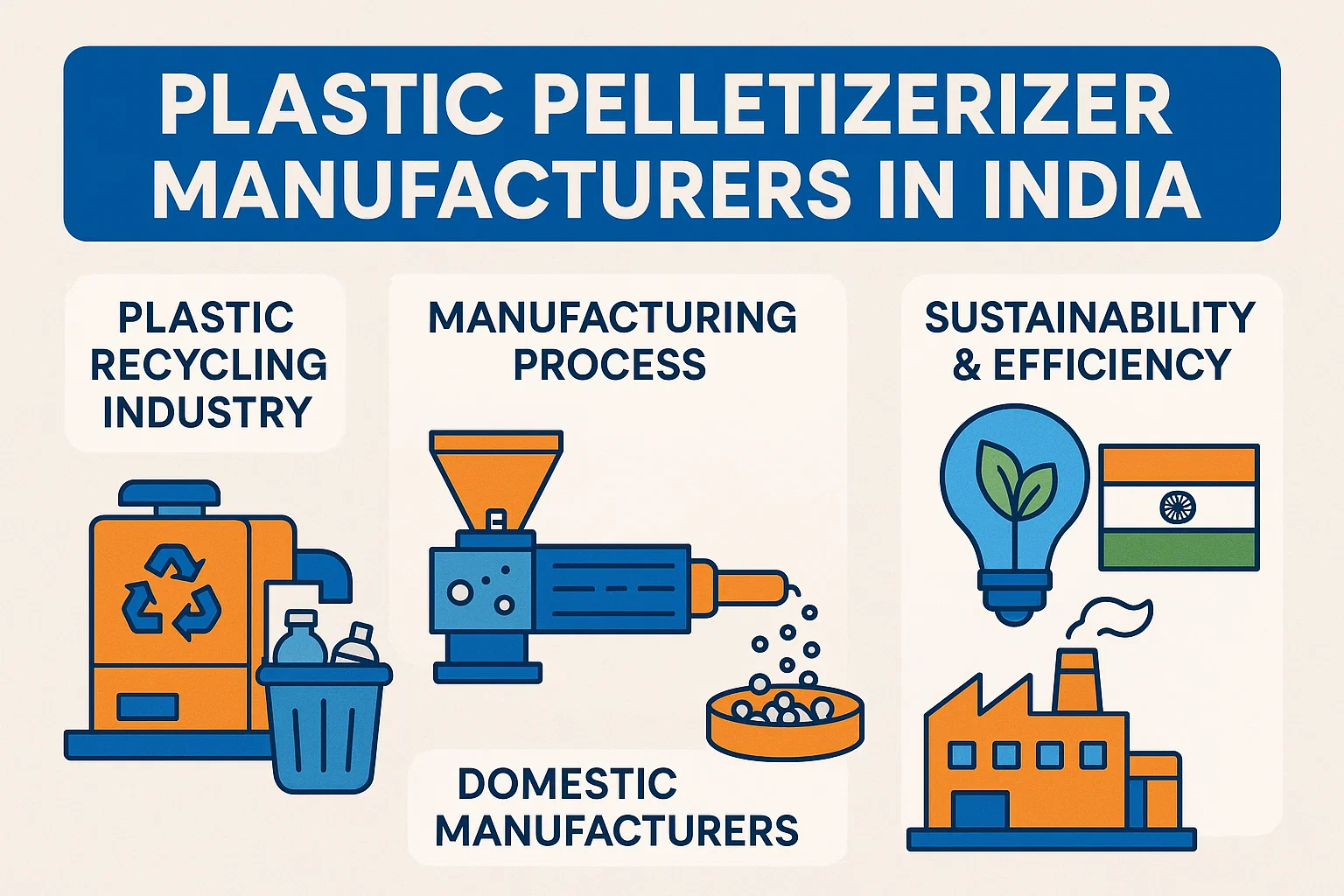
India generates millions of tonnes of plastic waste every year, and a growing share of it is being diverted from landfills into recycling plants. At the heart of almost every one of those plants sits a plastic pelletizer — the machine that turns washed flakes and regrind into uniform, market-ready pellets. Whether you are setting up a new recycling line or upgrading an existing one, choosing the right pelletizer — and the right manufacturer behind it — is one of the highest-leverage decisions you will make. This guide walks through the Indian pelletizer market, the technology that matters, and how to evaluate manufacturers before you commit.
India’s Plastic Recycling Boom: Why Pelletizer Demand Is Growing
India’s plastic recycling sector is expanding at a pace few other markets can match. The country’s Plastic Waste Management Rules and Extended Producer Responsibility (EPR) framework have pushed brand owners and recyclers alike to formalize collection and processing. At the same time, export demand for recycled pellets — particularly rPET, rPE, and rPP — has given Indian recyclers a strong commercial reason to invest in better equipment.
A pelletizer is the bottleneck machine in most recycling lines: everything upstream exists to feed it clean material, and everything downstream depends on the pellet quality it produces. That is why buyers increasingly evaluate plastic pelletizer manufacturers in India not just on machine price, but on engineering depth and long-term support.
What a Plastic Pelletizer Does
A plastic pelletizer converts plastic waste — washed flakes, film regrind, or crushed rigid scrap — into uniform pellets that can be sold as raw material or fed directly into extrusion and molding lines. The core process is straightforward: material is metered into a heated barrel, melted and homogenized by a rotating screw, filtered to remove residual contamination, and then cut into pellets at the die face. Pellets are cooled, dried, and conveyed to storage.
Well-made pellets share a few non-negotiable traits: consistent size, stable melt flow, low moisture, and minimal contamination. Pellet buyers grade suppliers on exactly these attributes, which is why the pelletizer’s screw design, filtration, and temperature control matter far more than its headline throughput number.
Plastic Pelletizer Manufacturers in India: The Market Landscape
The Indian market has three broad tiers of pelletizer suppliers. At the top are established engineering manufacturers with in-house design, CNC machining, and commissioning teams; they build machines to order, customize screw geometry and filtration for your material, and support the machine for its full working life. In the middle are regional fabricators who assemble serviceable machines from bought-out components at lower prices but with limited customization and thinner after-sales networks. At the bottom are traders rebadging imported or copied machines with little engineering backup.
For a buyer, the practical difference shows up after commissioning: who answers the phone when a heater band fails at 11 p.m., who stocks the correct screen pack and cutter blades, and who can re-tune the screw profile when you switch from HDPE bottles to printed LDPE film. The purchase price is a one-time event; the operating relationship lasts a decade. Evaluate pelletizer machine manufacturers in India on the total cost of that decade, not the invoice of day one.
Technology Trends Shaping Modern Pelletizers
Pelletizer technology has moved well beyond the basic single-screw extruder. The trends worth paying for include energy-efficient drive systems and barrel heating that cut per-kilo power consumption; automation and PLC-based controls with recipe storage so changeovers do not depend on operator memory; and multi-material screw designs that handle a wider feedstock mix without reconfiguration. For compounding and heavily contaminated streams, twin-screw extruder pelletizing systems offer superior mixing and devolatilization compared with single-screw machines.
On the cutting side, water-ring and strand pelletizing remain the two mainstream choices. Water-ring systems suit high-throughput film lines; strand systems give cleaner cuts for rigid regrind. For washed film, water-ring pelletizing lines configured for PP/PE film pair the cutter with dewatering and drying stages tuned to film’s low bulk density.
Imported vs Locally Built: What Indian Buyers Should Weigh
Indian buyers face a genuine choice between domestic manufacturers and imported machines, typically from China or Europe. European machines set the benchmark for build quality and automation but carry premium prices and longer lead times for spares. Chinese-built machines, including those from established exporters like Rumtoo, often hit a strong price-performance point: modern designs, shorter delivery, and increasingly professional commissioning support for the Indian market.
Domestic Indian manufacturers offer the shortest service response and rupee-denominated pricing, which simplifies budgeting. The tradeoff is that engineering sophistication varies widely across local builders, so due diligence matters more, not less. Whichever route you take, insist on visiting at least one operating reference plant running your material — a machine that performs in a brochure and a machine that performs on washed post-consumer film are sometimes two different machines.
How to Vet a Pelletizer Manufacturer: Factory Audit Checklist
Before placing an order, run the supplier through a structured evaluation. The strongest signal is an in-person or video factory audit: do they machine their own screws and barrels, or buy everything in? Is there a test lab where they can run your material? Can they show you machines at various stages of assembly, not just a finished showroom unit?
- Reference plants: Ask for two or three customer contacts running similar material and capacity, and actually call them.
- Engineering team: Who designs the screw profile for your material, and what data do they base it on?
- Spares commitment: Which wear parts are stocked locally, and what is the guaranteed lead time for the rest?
- Commissioning scope: Is installation supervision, operator training, and performance testing included in the price or billed separately?
- Warranty terms: What exactly is covered, for how long, and what voids it?
Rumtoo, for example, pairs its pelletizing lines with application engineering — screw and filtration configurations selected for the buyer’s actual feedstock — plus installation supervision and operator training. That combination of customized engineering and hands-on commissioning is what separates a machine vendor from an equipment partner.
Cost Drivers: What Determines Pelletizer Pricing
Pelletizer prices vary widely because the machines vary widely. The main cost drivers are capacity (screw diameter and drive power), the level of automation (manual controls vs PLC with recipe management), the filtration system (manual screen changers vs continuous hydraulic units), and the cutting/drying configuration. A basic single-screw strand pelletizer for clean in-house scrap sits at the low end; a fully automated water-ring line with degassing, continuous filtration, and integrated drying for washed post-consumer film sits much higher.
When comparing quotes, normalize on cost per kilo of good pellets over a realistic operating year — including power consumption, wear-part replacement, and expected downtime — rather than on purchase price alone. A cheaper machine that produces off-spec pellets or sits idle waiting for spares is the most expensive machine you can buy. Our plastic recycling machine cost guide breaks down how capacity, automation, and configuration move the price.
RFQ Checklist: What to Confirm Before You Buy
- Your material, precisely: Polymer type, form (film, flake, rigid), contamination level, and moisture content after washing.
- Target output: Required throughput in kg/h and pellet specifications your buyers demand.
- Utilities: Available power supply, water, and compressed air at your site.
- Scope clarity: Exactly what is included — feeders, filtration, pelletizing, drying, controls, spares kit, commissioning.
- Performance guarantee: Throughput and pellet quality warranted on your material, with remedies if unmet.
- Timeline: Manufacturing lead time, shipping, and commissioning schedule in writing.
Frequently Asked Questions
What types of plastics can a plastic pelletizer process?
Most pelletizers handle PE, PP, and similar polyolefins; many also process PET, PS, and ABS with the right screw and temperature profile. PVC requires corrosion-resistant construction because of the hydrogen chloride released during processing. Always confirm your specific polymer and contamination level with the manufacturer before ordering.
How much does a plastic pelletizer cost in India?
Pricing depends on capacity, automation level, and configuration — a basic machine for clean scrap costs far less than a fully automated line for washed post-consumer film. Request itemized quotes from two or three qualified manufacturers and compare on cost per kilo of good pellets, not just purchase price.
Should I buy a locally built or an imported pelletizer?
Both can work. Local builders offer faster service response and rupee pricing; established importers often bring more advanced screw and filtration designs at competitive prices. The deciding factors should be reference plants running your material, spares availability, and the quality of commissioning support — not the country of manufacture alone.
What capacity pelletizer do I need?
Size the pelletizer to your washing line’s real output, not its nameplate rating, and leave 15–20% headroom for feedstock variation. Undersizing creates a bottleneck that idles your whole line; oversizing wastes capital and runs the machine inefficiently at partial load.
Is installation and operator training included?
It should be — or at least clearly itemized. Professional suppliers include installation supervision, commissioning with performance testing on your material, and operator training covering startup, changeover, and routine maintenance. Get the scope in writing before you sign.
Can the machine be customized for my specific material?
Reputable manufacturers customize screw geometry, L/D ratio, filtration fineness, and the cutting system to match your feedstock — printed film, rigid flake, and fiber waste each need different configurations. If a supplier offers only fixed standard models with no application engineering, treat that as a warning sign.
What after-sales support should I expect?
At minimum: a defined warranty period, locally stocked wear parts (heater bands, cutter blades, screen packs), remote troubleshooting, and a committed response time for on-site service. Ask for the spares price list upfront — it reveals how the supplier plans to treat you after the sale.
See Our Pelletizing Systems and Request a Quote
If you are evaluating plastic pelletizer manufacturers in India, start with a supplier who engineers the machine around your material. Explore Rumtoo’s plastic pelletizing systems — from single-screw lines for clean scrap to twin-screw compounding setups — and send your material specs for a tailored quotation.
