


Belt Conveyor Systems for Plastic Recycling
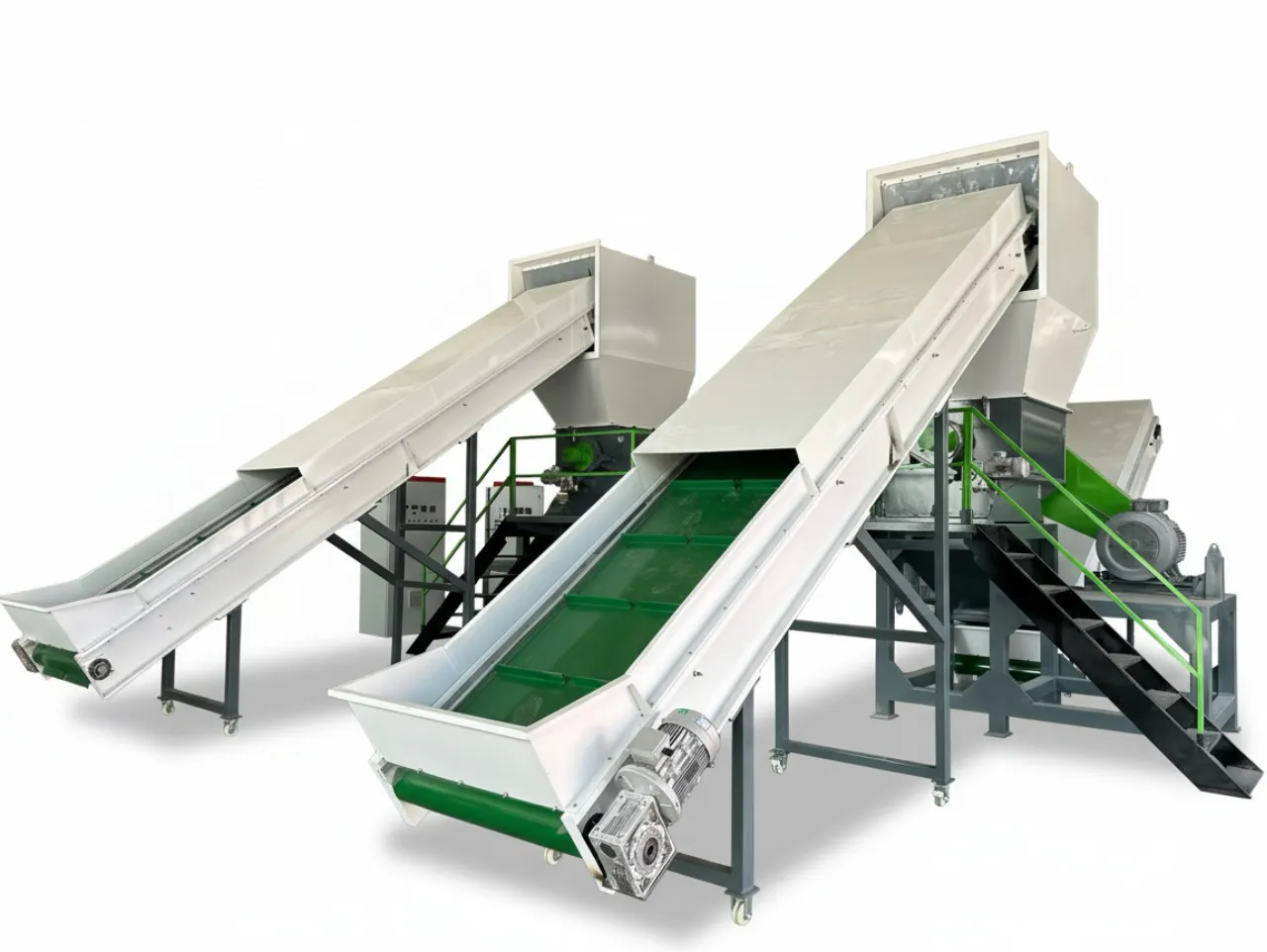
Our custom-built belt conveyor systems are the backbone of any efficient plastic recycling operation. Engineered for durability and versatility, they seamlessly transport, sort, and integrate with every stage of your process, from shredding and washing to drying, ensuring a continuous and automated workflow.
Key Advantages
Built for continuous plastic recycling lines—custom layouts, durable belts, and reliable transfer across process stages.
- Customizable Solutions
Tailored systems including flat, inclined, and high-speed models to match your plant layout and throughput.
- Durable Construction
Wear-resistant rubber or PVC belts with sealed edges, built for harsh recycling environments.
- Precise Speed Control
Inverter-driven speed control keeps transfer stable with upstream and downstream equipment.
- Reliable Transport
Continuous belt transfer reduces manual handling and keeps material moving through the line.
- Seamless Integration
Designed to connect shredding, washing, sorting, drying, and packing stages.
- Energy Efficient
Balanced drive sizing for continuous duty without unnecessary power draw.
- Material Feeding & Transfer
Feed and transfer shredded or loose plastic between machines and process zones.
- Sorting and Classification
Carry material through sorting stations for stable, continuous classification flow.
- Washing & Cleaning Lines
Transport wet or dirty fractions through washing modules with durable belt options.
- Drying & Dewatering
Link dewatering and thermal drying stages for continuous dry-out handling.
How a Belt Conveyor Works
Belt conveyors use two or more pulleys with a continuous belt loop. At least one pulley is powered (drive pulley) and moves the belt; unpowered idler pulleys support and guide the belt so material travels from the loading point to the discharge point.
Key Components
- Belt — Carries the material; common options include rubber, PVC, or fabric constructions for recycling duty.
- Drive pulley — Powered pulley that propels the belt and load.
- Idler pulleys / rollers — Support and guide the belt along the frame.
- Frame — Structural support for the full conveyor run, inclines, and transfer points.
- Loading and discharge points — Where material enters and leaves the conveyor, matched to upstream/downstream machines.
Maintenance and Safety
Regular inspection keeps belt conveyors reliable in continuous recycling plants: check belt tracking and wear, confirm pulleys and rollers run freely, and verify the motor/gearbox. Safety practice includes operator training, guards, emergency stops, and clear signage around moving parts.
Beyond plastic recycling lines, the same belt-conveyor principles apply in manufacturing, mining and quarrying, agriculture, warehousing, and food processing—always with layout and belt selection matched to the material.
Main Technical Parameters
Custom conveyor solutions. Common specifications below can be adjusted to your requirements.
| Parameter | Specification |
|---|---|
| Belt Width | Customizable (e.g., 500mm – 2000mm) |
| Conveyor Length | Customizable (e.g., 3m – 50m) |
| Conveying Speed | Variable Speed (Inverter Control) |
| Motor Power | Dependent on length and load (e.g., 1.5kW – 15kW) |
| Belt Material | High-Durability PVC or Rubber |
| Optional Features | Barrier Strips (Cleats), Side Walls, Incline/Decline Sections |
Standard Configuration
Warranty & Installation
- 1-Year Limited Warranty
All our recycling machinery comes with a limited warranty, ensuring peace of mind with your purchase.
- Expert Installation Support
We offer installation packages where our engineers can travel to your facility to guide you through the setup process. All our products can be customized to customer requirements.
FAQ
Common questions about belt conveyors for plastic recycling lines.
They move material between stages such as shredding, sorting, washing, drying, and packing. A well-designed conveyor layout keeps the line continuous and reduces manual handling.
Common options include wear-resistant rubber or PVC belts with sealed edges. Optional features can include cleats (barrier strips), side walls, and incline or decline sections for your plant layout.
Yes. Length, width, incline, speed control, and frame configuration can be tailored to throughput, material type, and available floor space. Share your layout and capacity targets for a recommended design.
Systems can be configured for precise speed control so feeding and transfer match upstream and downstream equipment, helping stabilize overall line efficiency.
Routine checks typically cover belt tracking and tension, rollers/idlers, drive components, and side guards. Durable construction is intended to keep service intervals predictable in harsh recycling environments.
Yes. Machines typically include a limited warranty on core components, and installation support packages are available so engineers can assist with setup at your facility.
Inquire Now
To get a quote for a custom belt conveyor system that fits your exact needs, send us a message using the form below. Our experts will help you design the perfect solution.
