
خط إعادة تدوير رقائق زجاجات البولي إيثيلين تراي كاست بسيط السبيكة
محلل تدفق واحد مُجهز بغسالة بولي إيثيلين تيترا فتات تحت الماء، مع 2 منطقة باردة للإزالة المسببة للتسرب بالضغط الشفاف وتمييع البولي إيثيلين تيترا تحت الماء — يحول الفتات المُغسلة من زجاجات البولي إيثيلين تيترا إلى بولي إيثيلين تيترا متساوي الحجم بسعة من 300–1,200 كجم/ساعة، مع الحد من انخفاض كثافة التسرب الداخلية (IV) إلى ≤0.05 دلي/جم.
- المكثف يرتقي ويكثف الفلakes لضمان تدفق ثابت ومتسق للمكثف.
- تطهير شامل بثلاث مناطق لاستبعاد الرطوبة المتبقية والبخارات لضمان الحفاظ على IV.
- الإنتاج تحت الماء ينتج حبيبات كروية متساوية القطر بين 3–5 ملم للاستخدام في الألياف، الألواح، والتصميم بالحقن.
300–1,200
مجموعة نطاق الإنتاج بحدود kg/h
≤0.05
dL/g IV سقوط (مع الحفاظ على التركيز)
4 مراحل
العملية: تجميع → تكسير → تصفية → تقطيع إلى حصص
1 سنة
ضمانة محدودة على المكونات الرئيسية
نظرة عامة على المعدات
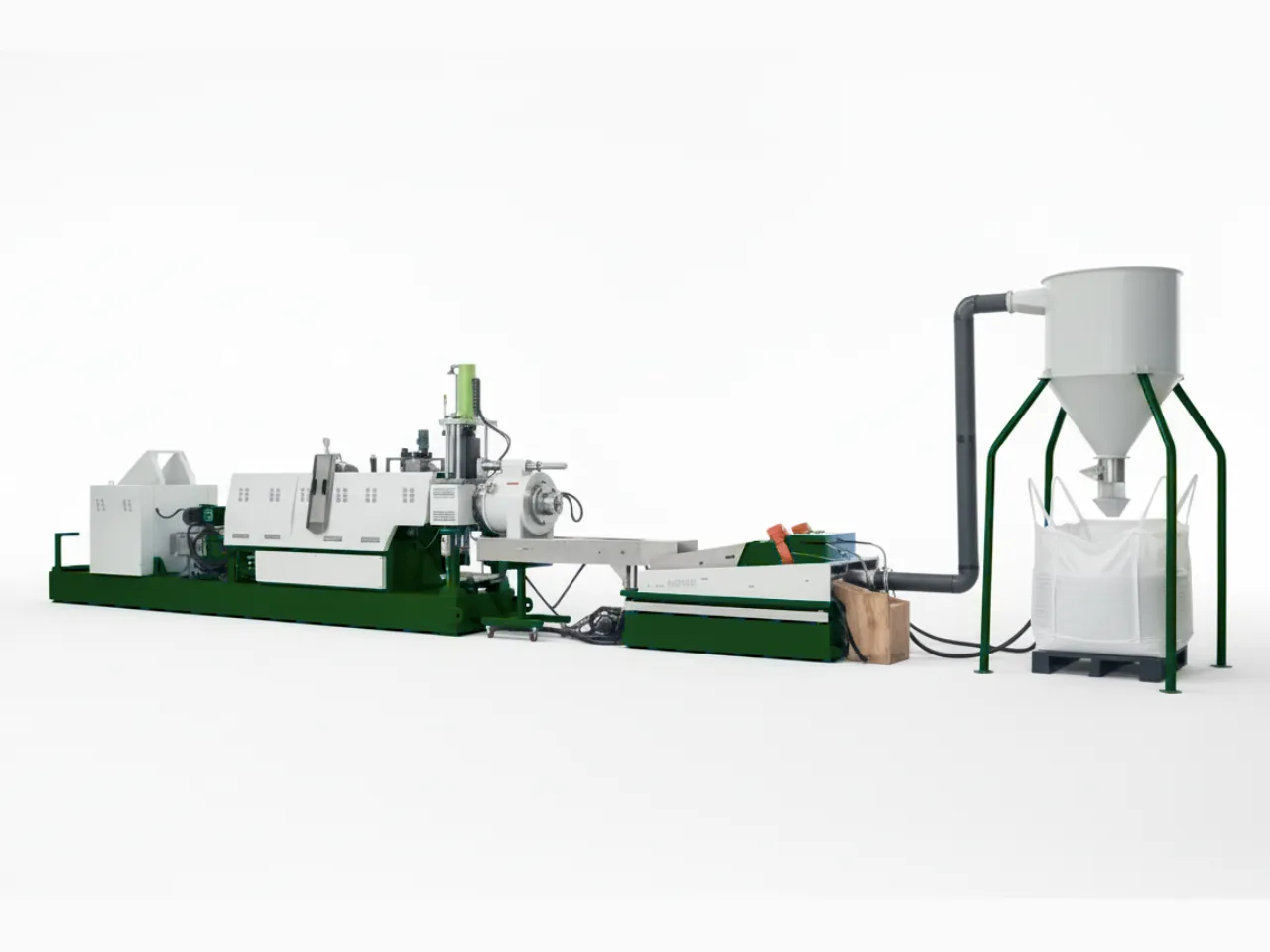
ترتيب كامل لإنتاج البوليمرات
الخط يدمج مكثف/مسبق التسخين، مضخة إسطوانية واحدة، فصل الغاز بالفراغ بثنائي المنطقة، تصفية السائل، رأس تجميع البوليمرات تحت الماء، ومجفف الدوران في تصميم صناعي متواصل واحد. ت enter طرف الخط; البوليمرات الرطبة المتجانسة rPET ت exit طرف الآخر.
نظام تقطيع الحصص وتجفيفها تحت الماء
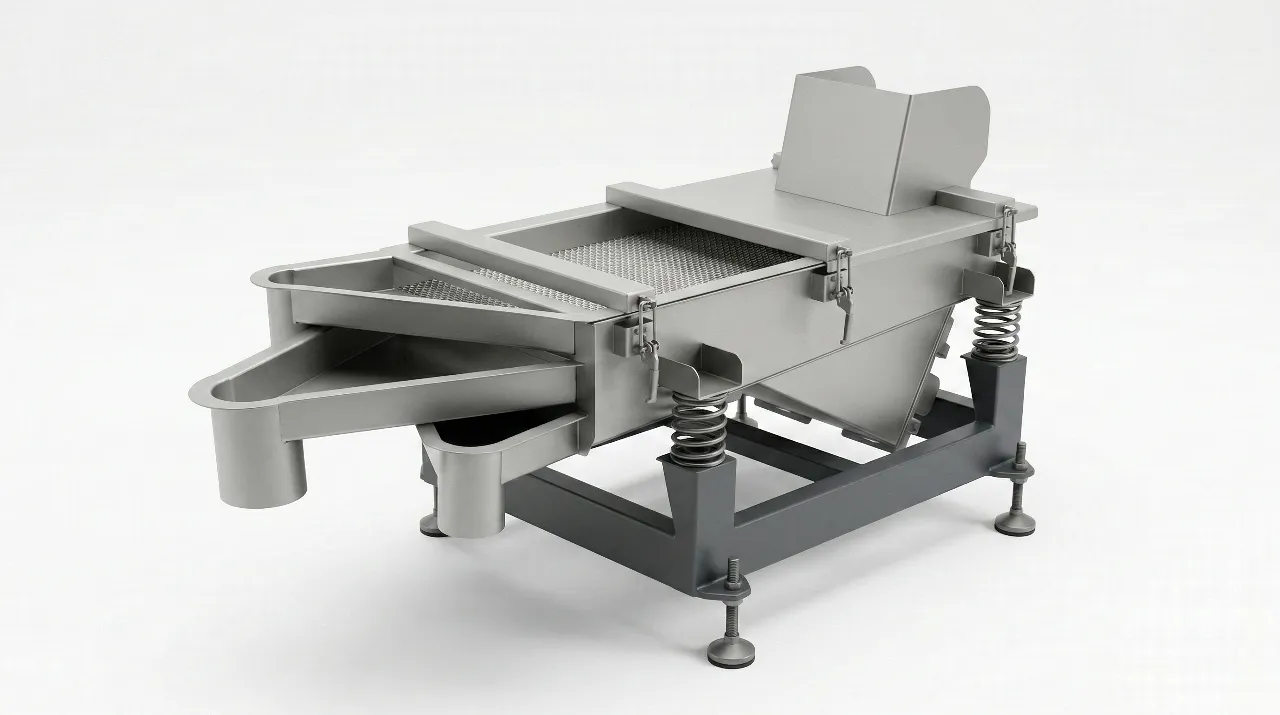
يقطع الطرد المائي للبوليمر المذيب إلى بوليمرات كروية بقطر 3–5 ملم، والتي يتم تعميرها فورًا بالماء الدوران لتجنب التجميع. يزيل الجهاز الцентفوجي الماء السطحية، ثم يتم فصل الغبار باستخدام الشاشة المتناثرة قبل نقل البوليمرات للعبوة.
المكونات الأساسية
كل مرحلة من الخط مصممة خصيصًا لاحتياجات التبريد والمرونة الخاصة بـ PET المعاد تدويره.
مكثف / مسبك حراري
يقلل حجم الحجم ويطرح الرطوبة السطحية من خلال الحرارة الناتجة عن الاحتكاك، قبل دخول المادة نهاية صندوق التشكيل. هذه الخطوة الحاسمة تضمن استقرار معدل التغذية وتتيح ضغط السائل المتساقط المتسق.
مáy nghiền trục đơn ( thép nitride )
مصدر نيترويدي من الصلب المعدن المعدن بدقة (L/D 30:1–36:1) يذوب ويحسن التساوي PET بقطع متحكم به — منخفض بما يكفي لتقليل تآكل السلسلة والفقدان IV. درجة حرارة التشغيل تكون عادةً 265–285 °C اعتمادًا على جودة السائل.
2-منطقة سحب الغاز بالفراغ
الوصلتان الهوائية المستقلتان يصرفان بخار الرطوبة المتبقية، والأetaldehyde، وأخر الغازات ذات الوزن الجزيئي المنخفض من السائل. بالإضافة إلى تجفيف مسبق المصعد، فإن هذا يحد من انخفاض IV إلى حوالي ≤0.05 dL/g.
تصفية السائل (محول شبكة آلي)
آلة تغيير الشاشة الآلية الهيدروليكية (نوع التدفق العكسي) تزيل بشكل مستمر الملوثات الصلبة من تدفق السائل دون إيقاف الإنتاج. دقة المرشح قابلة للاختيار (40–150 µم) اعتمادًا على متطلبات خلوه المطلوب من الإنتاج.
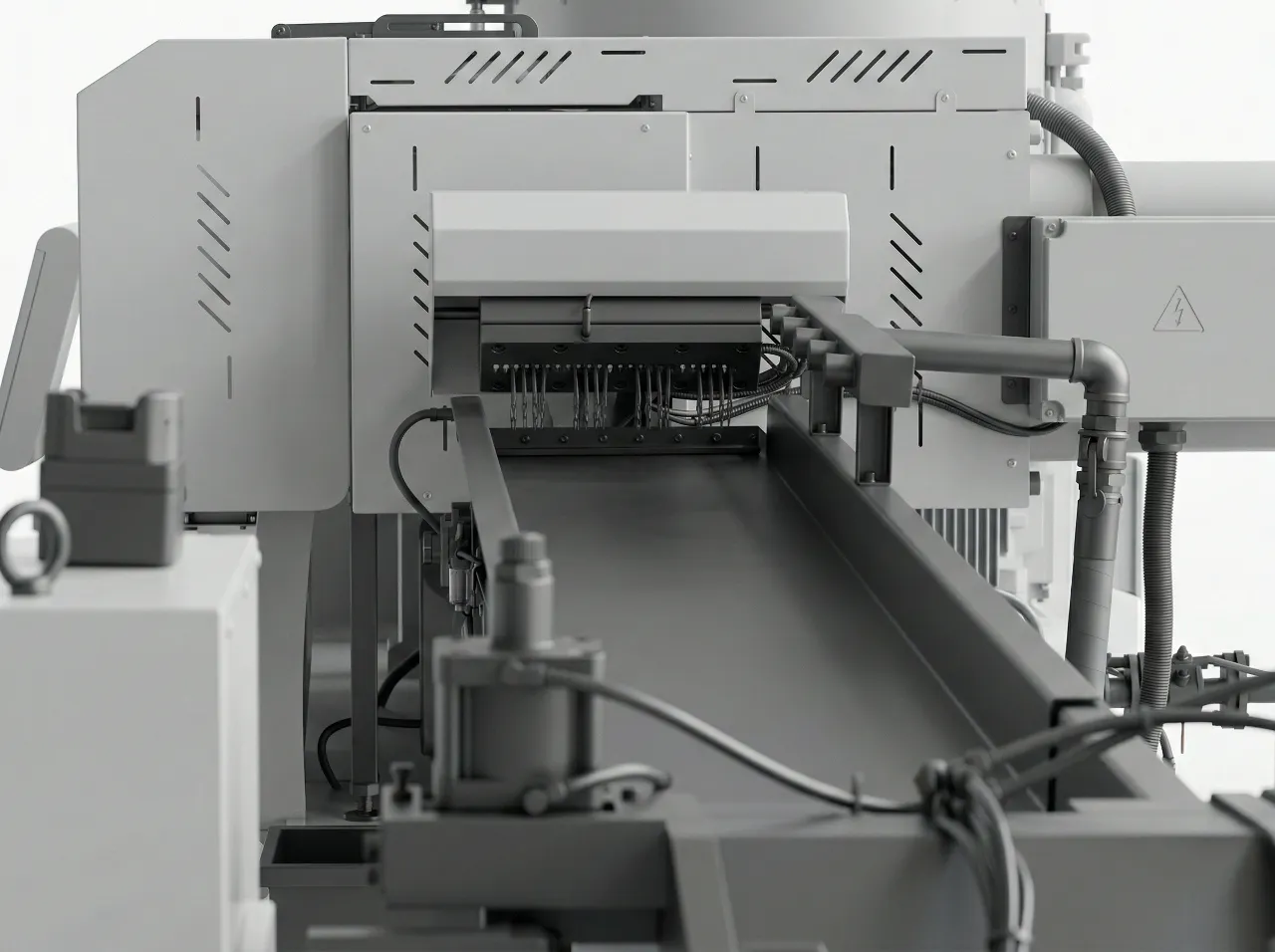
رأس تقطيع البلاستيك تحت الماء
آلة قطع الوجه المعدني تعمل غامقة، وتبريد كل سلك فوراً إلى كتلة صغيرة دائرية متساوية بسمك 3–5 ملم. تبريد القطع بالماء يمنع التشوه والتجمع، مما ينتج منتجاً متسقاً وخالي من الغبار.
جهاز甩干机 + جهاز فحص بالاهتزاز
مجفف مركزي يزيل الماء السطحي من البالونات لتحقيق رطوبة تقل عن <0.5%. يفصل مصف حركي الناعمات والقطع الكبيرة قبل نقل البالونات النهائية التي تتوافق مع المواصفات إلى تعبئة الحقيبة الكبيرة أو التخزين في الخزان.
مبدأ العمل
يتبع خط إنتاج حبيبات البولي إيثيلين تيريفثالات (PET) لدينا عملية دقيقة متعددة المراحل لتحويل رقائق البولي إيثيلين تيريفثالات إلى حبيبات عالية الجودة.
1. التغذية وإزالة الرطوبة
يتحكم نظام آلي في سرعة التغذية، بينما يزيل مكبس الرطوبة من الرقائق.
2. إخراج بالسلك الواحد
تخضع مادة البولي إيثيلين تيريفثالات (PET) لعمليات الضغط والانصهار والتجانس في جهاز البثق عالي الأداء.
3. معالجة القضبان
يحرص القضبان النيتيد الصلب على تسخين البلاستيك بتحكم دقيق في درجة الحرارة لضمان الذوبان المستقر.
4. تطهير بالفراغ
تعمل هذه الخطوة على إزالة المواد ذات الوزن الجزيئي المنخفض والرطوبة المتبقية من مادة البولي إيثيلين تيريفثالات المنصهرة.
5. تصفية الذوبان
تعمل مرحلة الترشيح المخصصة على تحسين نقاء البلاستيك المذاب قبل عملية التكوير.
6. التجميع
يقوم نظام التكوير تحت الماء بتحويل رقائق البولي إيثيلين تيريفثالات المنصهرة إلى حبيبات موحدة وعالية الجودة.
7. تجفيف والتغليف
يتم تجفيف الرقائق عبر شبكة الاهتزاز والجافية، ثم تغليفها للنقل.
مكبس حلقي واحد مقابل مكبس حلقي ثنائي
للمستخدمة القياسية لخلاطات قصب البلاستيك PET، يُفضل استخدام محرك دوار واحد. إليك كيف يُقارن.
| عامل | مáy nghiền trục đơn | مáy ép trục kép |
|---|---|---|
| مقطع خارق ميكانيكي | تقليل إجهاد السائل العالٍ — يقلل من خطر قطع السلسلة الحرارية والميكانيكية في PET. | أعلى قوة تكسير — يفيد الخلط المفرد ولكن يمكن أن يسرع تآكل IV في PET إذا لم يتم إدارته بحذر. |
| رعاية الرابع | أفضل ملاءمة لحفظ كثافة الانزيم في تطبيقات إعادة تدوير rPET القياسية. | يتطلب التحكم الدقيق في درجة الحرارة وقيمة الوقت الإقامي؛ يعتبر أكثر ملاءمة عند إضافة مضافات تمديد السلسلة لإعادة بناء IV. |
| قدرة الخلط | محدود — بشكل أساسي لذوبان، تخليص الغاز، وتصفية الفلakes النظيفة. | الممتاز — يُفضّل عند إضافة المضافات، والمبيضات، ومحركات الحريق، أو ممدّات السلسلة إلى السائل. |
| تكلفة ومهماز | تكلفة ملكية أقل، تصميم ميكانيكي أبسط، صيانة ميكانيكية أسهل للمشغل. | أعلى تكلفة رأس مال وتشغيل؛ تصميم دوار أكثر تعقيدًا وأجزاء معالجة للخدش. |
| أفضل ملاءمة لـ | الشكل القياسي لقشور زجاج بلاستيك PET المستهلكة بعد الاستخدام → ألياف، لوح، أو قطرات بلاستيكية لصب التطبيق. | التشكيل التفاعلي، أو إضافة خلط الألوان المخصصة، أو خلط الرPET الخاص. |
إذا كان عمليّتك يحتاج قدرة على التكثيف بالتروس المزدوجين — مثل إضافة مضافات تمديد السلسلة أو خلطات اللون إلى السائل — راجع خطنا المزدوج الشفرين للتكثيف للمقارنة.
التطبيقات
الـ I و جودة العينة من العبوات المعدلة من هذه الخط تلبي المتطلبات لثلاثة أسواق نهاية رئيسية.
-
ألياف البوليستر والألياف الطويلة
نطاق الـ IV: 0.40–0.65 دليتر/جرام. تُستخدم قوالب الرPET من هذه الخطوط بشكل واسع كمواد خام لإنتاج الألياف البوليستر المعاد تدويرها، والتي تُستخدم في الأقمشة، والنسيج غير المفروم، والمواد الممتدة. هذه هي أكبر قناة تصريف لـ الرPET المعاد تدويره من المستهلكين النهائيين عالميًا.
-
PET ورقة واختراق حراري
نطاق الـ IV: 0.70–0.85 دليتر/جرام. مناسب لورق التغليف المصنوع من A-PET أو RPET المستخدم في صلصات الطعام، الأغلفة المعلقة، والصناديق الزجاجية. مرحلة تصفية المذيب في هذه الخطوط تزيل جسيمات الجل والملوثات التي قد تظهر كأعطال في الأوراق الشفافة.
-
تقنية حقن البلاستيك
مجال IV: 0.72–0.85 dL/g. يمكن استخدام حبيبات rPET المنقوعة في حقن صناديق غير غذائية، شريط التثبيت، غلق، وأجزاء هندسية. تأكد من شكل حبيبات متساوية من قطع تحت الماء لضمان التغذية المستقرة إلى آلات حقن الموضع.
-
رPET من فئة زجاجة (مع SSP)
مجال IV: >0.80 dL/g. يمكن توجيه حبيبات الخط من هذه السلسلة إلى معامل تحويل البوليمر الصلب (SSP) لتحسين IV. هذا هو مخرج rPET ذو القيمة الأعلى ويطلب IV ≥0.80 dL/g.
المواصفات الفنية
معلمات الخط العامة. يتم تحديد التكوين المحدد لكل طلب بناءً على نوع المواد الخام ودرجة الناتج المستهدفة.
| المعلمة | تخصيص |
|---|---|
| المواد القابلة للتطبيق | رقائق زجاجة PET المنقوعة بعد الغسل، ≤14 مم |
| الرطوبة المدخلة | ≤3% (بما في ذلك الرطوبة) موصى به في المدخل |
| شكل حبيبات الناتج | كروي، قطر 3–5 مم |
| رعاية الرابع | انخفاض IV نموذجي ≤0.05 dL/g (IV المدخل 0.72–0.80 → IV الناتج 0.68–0.76 dL/g) |
| قطر المسمار | 100 مم – 160 مم (يتغير بناءً على النموذج) |
| نسبة الطول إلى العرض (L/D Ratio) | 30:1 – 36:1 |
| مناطق البرميل | 6–8 مناطق حرارة مستقلة يتم التحكم فيها |
| نظام إزالة الغازات | تسخين بالفراغ في منطقتين (مفتوحتي الباب) |
| الترشيح الذائب | مغير الشاشة التلقائي المائي (نوع العكس); قابلة للتحديد 40–150 µm |
| طريقة تكوين الأكياس | تحويل الحبيبات تحت الماء |
| نظام التحكم | PLC + HMI شاشة لمس ملونة |
| نطاق قدرة الناتج | 300 – 1,200 كجم/ساعة |
المواصفات الفنية
النماذج المتاحة
| نموذج | قطر المسمار | قوة المحرك الرئيسي | الإخراج (كجم / ساعة) |
|---|---|---|---|
| سي تي-100 | 100 مم | 90 كيلو واط | 300 |
| سي تي-130 | 130 مم | 132 كيلو واط | 600 |
| سي تي-140 | 140 مم | 160 كيلوواط | 900 |
| سي تي-160 | 160 مم | 250 كيلوواط | 1,200 |
سي تي-100
سي تي-130
سي تي-140
سي تي-160
التعليمات
تحويل رقائق PET المنقوعة إلى حبيبات متساوية، كثيفة (عادة 3–5 مم). يفتح هذا الشكل المعياري إعادة الاستخدام ذي القيمة الأعلى في المراحل السفلية - بما في ذلك تدوير خيوط البوليستر، Extrusion PET، وحقن البلاستيك - حيث لا يمكن استخدام مادة الخام الرقائق مباشرة. كما أن الحبيبات تتدفق بشكل موثوق أكثر من خلال معدات المعالجة السفلية وتكون أسهل في النقل والخزن مقارنة بالرقائق.
الـPET قابلة للانحلال في الماء بشدة. حتى 300–500 ppm من الرطوبة المتبقية في السائل يسبب تقطيع سلسلة هيدروليتيكيًا — يكسر السلاسل البوليمرية الطويلة ويخفض كثافة الانصهار الداخلية (IV). IV أقل يعني خصائص ميكانيكية أضعف وأقل ملاءمة للاستخدامات الصعبة. تتناول هذه الخطوة الرطوبة من جوانبين: يوفر المصغر التمهيدي الاصطناعي والتحجيم، ويأخذ نظام التطهير بال вакووم من النبضات المتبقية من السائل، مما يحافظ على انخفاض IV الطبيعي إلى ≤0.05 dL/g.
نعم. يمكن تكوين نظام تصفية السائل بتفاصيل شبكة مختلفة (40–150 µم) ومكاتبة تغيير الشبكة لتتناسب مع مستوى التلوث في تدفق الإدخال الخاص بك. قد تستخدم الصفائك الصناعية بعد الاستخدام أو الصفائك المستهلكة المصفية جيدًا حزمة شبكة معيارية، بينما يفيد تدفقات التلوث الشديد منفذ تغيير الشبكة الآلي الهيدروليكي (نوع التدفق العكسي) للحفاظ على معدل الإنتاج دون توقف في الإنتاج.
الشرائح البلاستيكية لزجاجات PET المستهلكة بعد الاستخدام عادة ما تدخل الخط عند قيمة IV بين 0.72–0.80 dL/g. مع تضخيم مناسب، تعقيم باردة بال вакووم، وتحكم في درجات حرارة القارورة، تظل قيمة IV للشرائح الخروجية بين 0.68–0.76 dL/g. وهذا يلبي متطلبات قيمة IV للخيوط البوليسترية (0.40–0.65 dL/g) ويقع عند أو قريب من الحد الأدنى لقيمات IV لزجاجات PET ودرجات التشكيل بالحقن (0.70–0.85 dL/g). بالنسبة لدرجة الجودة من زجاجة إلى زجاجة التي تتطلب IV >0.80 dL/g، سيكون من الضروري إضافة مرحلة التكثيف البوليمري بالحالة الصلبة (SSP) بعد المرحلة.
مضخة إسطوانية واحدة تطبق شدة ميكانيكية أقل على السائل، مما يحافظ بشكل أفضل على IV في عملية إعادة تدوير عجلات البوتل PET القياسية. مضخات الإسطوانية المزدوجة توفر خلط توزيعي ممتاز وتُفضّل عند إضافة المضافات (مكثفات السلسلة، الملونة، المملح) إلى السائل — ولكن شدتها الأعلى ومعقدتها تزيد من التكلفة وتزيد من خطر تآكل IV بشكل أكبر لعملية إعادة تدوير عجلات البوتل إلى البوليمرات. تستخدم معظم محطات إعادة تدوير البوليمرات PET من المستهلك النهائي تكوين إسطواني واحد لهذا السبب.
نعم. يُتوفر دليل إطلاق التشغيل عن بعد والتدريب على تشغيل الطرازات الكاملة. يتم شحن جميع الآلات مع ضمانة محدودة مدتها عام واحد تغطي عيوب التصنيع على المكونات الميكانيكية والكهربائية الرئيسية. تُتوفر قطع الغيار ودعم فني مستمر بعد مدة الضمان. اتصل بنا لمناقشة متطلبات تركيبك.
ضمان
-
ضمان محدود لمدة 1 سنة
جميع الآلات تتضمن ضمانة محدودة لمدة عام واحد تغطي عيوب التصنيع على المكونات الميكانيكية والكهربائية الرئيسية، مع توفر قطع الغيار ودعم فني بعد انتهاء مدة الضمان.
-
قابل للتعديل حسب متطلباتك
إعداد الخط — بما في ذلك قطر الشفرة، نوع المرشح، قوة التخلص من الغاز، والطريقة المتقطعة — يتم تحديده وفقاً لطلبك بناءً على مستوى التلوث للسائل الخام، وكمية الإنتاج المطلوبة (كجم/ساعة)، ونوع الجrade المتوقع للبوليمر المتقطع (الخيوط، الألواح، أو البوليمر المُدخَل).
-
تصليح عن بعد وتدريب
تتوفر إرشادات التركيب، ودعم إطلاق العمليات للسلسلة، والتدريب على عمليات التشغيل لمساعدتك على الوصول إلى إنتاج مستقر بأسرع وقت ممكن.
-
تكامل خط إعادة التدوير للبلاستيك PET
هذه الخطوطة للتصفيق مصممة للعمل كالمرحلة النهائية لنظام إعادة التدوير الكامل للصناديق البلاستيكية البوتوليك. انظر مجموعة كاملة منآلات تقطيع البلاستيك إلى حبيبات نقدم في إيجاد التركيبة المناسبة لعمليتك.
احصل على عرض أسعار
اتصل بنا اليوم للحصول على الأسعار، ومواعيد التسليم، واقتراح تصميم مخصص لخط إنتاج حبيبات البولي إيثيلين تيريفثالات (PET) الخاص بك.
