


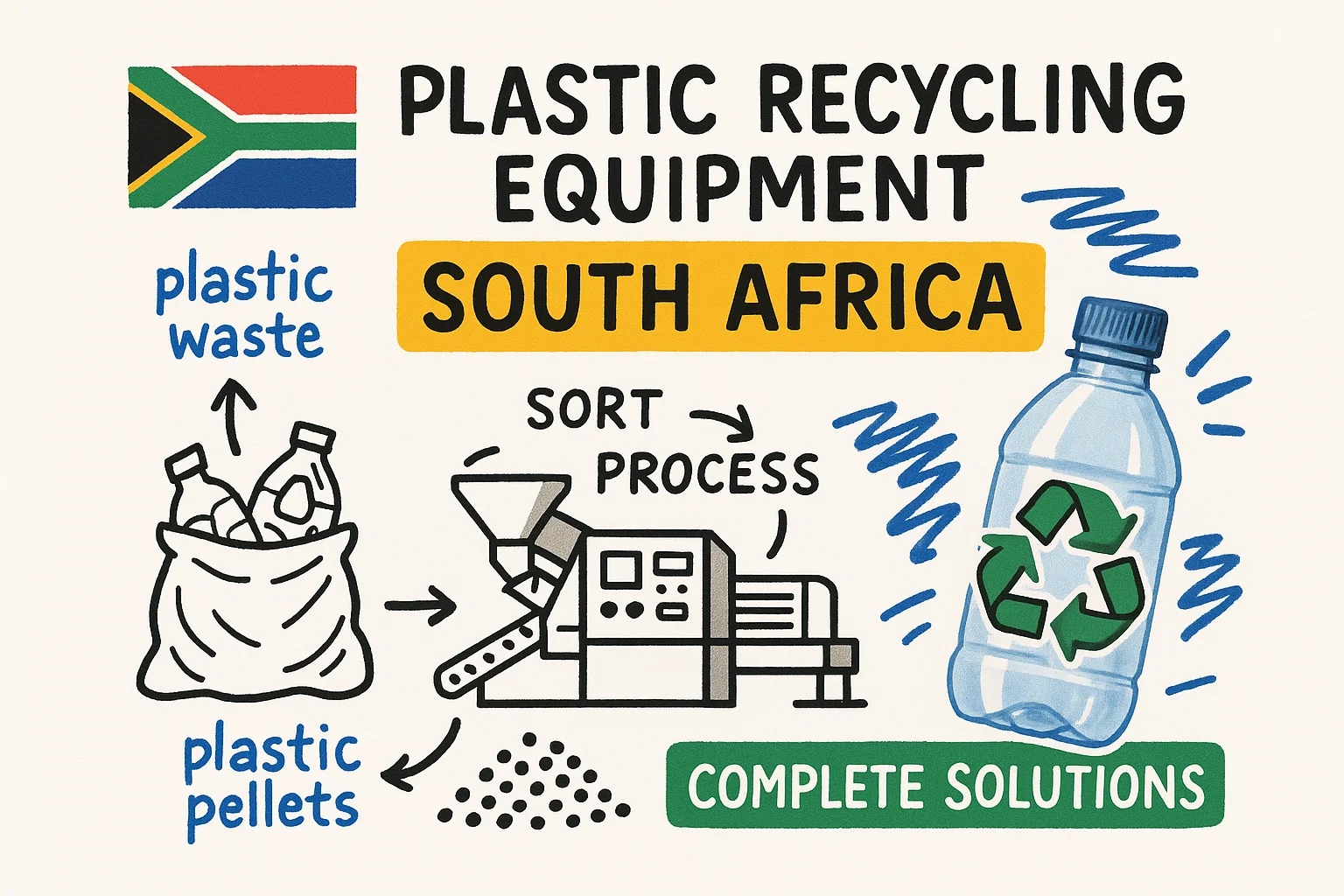
South Africa’s recycling industry stands at a turning point. With plastic waste generation exceeding 2 million tons annually and recycling rates hovering around 46%, businesses across the region need reliable equipment partners who understand local challenges and deliver proven solutions.
Understanding South Africa’s Recycling Equipment Needs
The South African market presents unique requirements that set it apart from other regions. Power supply inconsistencies, varying feedstock quality, and the need for robust equipment capable of handling contaminated materials define the landscape. Your recycling operation needs machinery built to perform under these real-world conditions.
When sourcing recycling equipment, South African businesses face a critical decision: import generic solutions or partner with manufacturers who provide localized support. The difference shows up quickly in uptime, maintenance costs, and long-term profitability.
Complete Plastic Recycling Solutions for Every Material Type
Modern recycling operations demand integrated systems, not isolated machines. A comprehensive solution starts with material evaluation and extends through every processing stage.[1]
PET Bottle Recycling Systems transform post-consumer bottles into food-grade flakes. These washing lines incorporate label removal, crushing, hot washing, and friction washing stages. South African beverage manufacturers increasingly specify recycled content, creating steady demand for high-quality output.
HDPE Container Processing handles milk jugs, detergent bottles, and industrial containers. The washing process removes adhesives, product residue, and contamination that would compromise pellet quality. Capacity options from 500 kg/h to 3,000 kg/h match operations from regional facilities to national processors.
Mixed Plastic Sorting and Processing addresses the reality of municipal collection streams. Advanced systems separate different polymer types, enabling you to extract value from mixed feedstock that competitors discard.
Equipment That Performs Under Local Conditions
South African recycling facilities operate in challenging environments. Coastal humidity affects electronics, inland dust penetrates seals, and power fluctuations stress motor systems. Equipment specifications must account for these factors.
Heavy-duty shredders with reinforced cutting chambers handle contaminated bales without constant jam clearing. Washing systems with closed-loop water recycling reduce operating costs in water-scarce regions. Pelletizing lines with voltage stabilization maintain consistent output despite grid fluctuations.
Material contact surfaces in stainless steel 304 resist corrosion in humid conditions. SKD-11 cutting blades maintain edges through abrasive contamination. These specifications separate equipment that lasts from machinery requiring constant replacement.
From Installation to Production
Equipment purchase represents only the starting point. Successful operations require proper installation, operator training, and ongoing technical support. This reality makes your manufacturer choice critical.
Comprehensive installation includes foundation preparation guidance, electrical system integration, and water treatment setup. Experienced technicians commission each system component, verifying performance before handover. Your operators receive hands-on training covering standard operation, quality control, and basic troubleshooting.
Post-installation support determines whether minor issues become production stoppages or quick fixes. Rapid spare parts availability keeps lines running. Remote diagnostic capabilities solve problems without waiting for technician travel. Annual maintenance programs catch wear before failure occurs.
Proven Performance in African Markets
Equipment specifications matter less than real-world results. Multiple installations across East and Southern Africa demonstrate reliable performance in similar operating conditions.
A 1,000 kg/h PET washing line in Johannesburg processes post-consumer bottles with contamination levels below 100 ppm, meeting food-contact standards. An HDPE processing facility in Cape Town achieves 95% uptime across two shifts daily. These results come from matched equipment configurations, proper installation, and ongoing support.
Making the Right Equipment Choice
Selecting recycling machinery requires evaluating several factors simultaneously. Processing capacity must match your material supply without excessive overhead during startup. Quality specifications should align with your target markets rather than exceeding actual requirements. Budget allocation needs to balance initial investment with operating costs.
Start by analyzing your feedstock: material types, contamination levels, and available volume. This assessment determines required equipment capabilities. Next, identify your output markets and their quality standards. Premium buyers pay for certified quality, while industrial applications accept lower specifications at reduced prices.
Calculate realistic throughput based on material availability, not theoretical capacity. A 2,000 kg/h line running at 60% utilization generates better returns than a 3,000 kg/h system struggling to source material. Factor in operator training time, maintenance requirements, and spare parts inventory when projecting startup timelines.
Building Your Recycling Operation
Successful recycling businesses combine proven equipment with strong material sourcing and established customer relationships. Equipment selection comes first because capacity constraints limit growth potential. Start with configurations matching current supply, then scale as your material network expands.
Rumtoo delivers complete plastic recycling machines engineered for demanding applications. Our washing lines, pelletizing systems, shredders, and granulators operate in facilities across Africa, Asia, and Latin America. Each installation receives comprehensive support from equipment selection through production ramp-up.
Technical consultation evaluates your specific requirements: material characteristics, target capacity, quality standards, and budget parameters. Detailed feasibility analysis provides realistic performance expectations based on your local conditions. Installation and commissioning services ensure proper setup from day one. Ongoing support keeps your operation running at peak efficiency.
Contact our technical team to discuss your plastic recycling project. We provide equipment specifications, layout planning assistance, and references from similar operations you can visit. Your investment deserves solutions proven in real-world conditions, not theoretical promises.
