


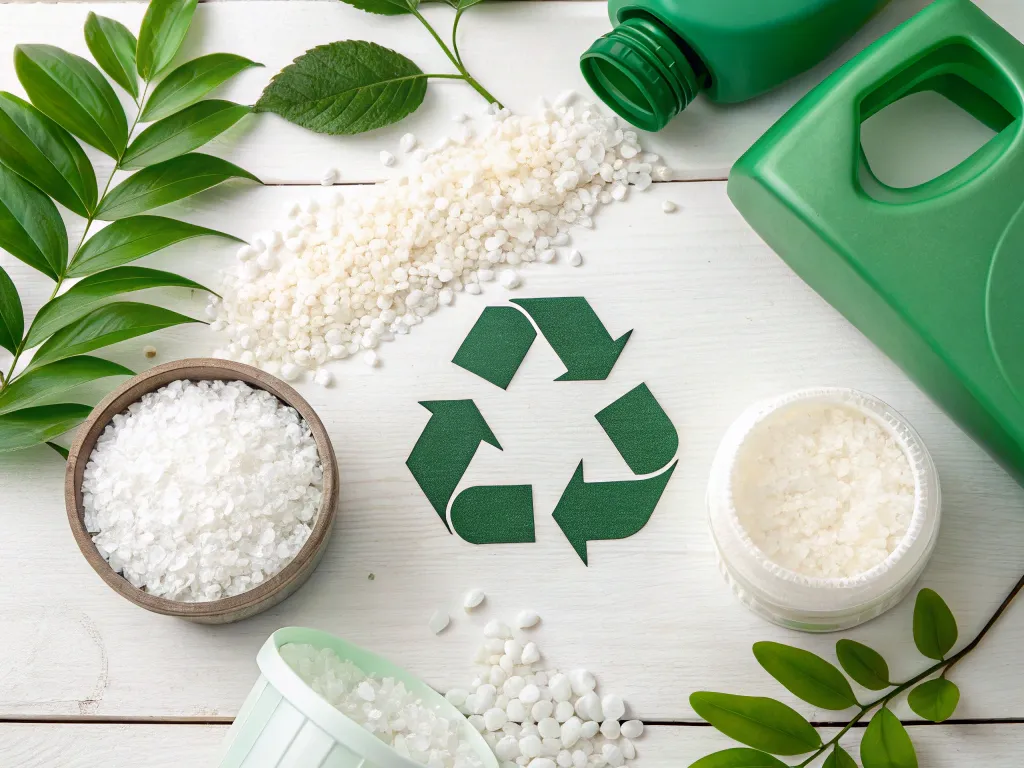
Rigid recycling machines are transforming waste management across major industries, offering sustainable solutions for processing hard plastics — bottles, containers, pipes, crates, and molded parts. This guide explains what rigid plastic recycling involves, which machines do the work, and how different industries put them to use.
What Counts as Rigid Plastic?
Rigid plastics are the hard, shape-holding kind: HDPE bottles and jerrycans, PP crates and buckets, PVC pipes and window profiles, PET bottles, ABS housings. Unlike films and bags, they are dense, do not tangle, and break into clean flakes under mechanical force — which makes them the most straightforward plastics to recycle mechanically.
The distinction matters because equipment is designed around it. Rigid plastics need powerful size reduction (shredders and crushers) but wash and dry easily. Films need the opposite: gentle handling, anti-wrapping designs, and dewatering equipment. Buying film equipment for rigid scrap — or vice versa — is one of the most common and expensive mistakes in recycling plant design.
The Rigid Recycling Process Chain
A complete rigid recycling line follows five stages. Sorting: infrared or manual sorting separates plastic types and removes non-plastics. Size reduction: a shredder breaks bulky items down, then a crusher or granulator reduces them to uniform flakes. Washing: friction washers and float-sink tanks remove labels, adhesives, dirt, and grit.
Drying: a centrifugal dryer spins off surface water, with thermal drying for the final moisture if pelletizing follows. Pelletizing: clean dry flakes are melted, filtered, and cut into pellets ready for manufacturing. Each stage protects the next — poor washing ruins pellet quality, and poor drying damages the extruder.
Packaging Industry Applications
The packaging sector is the largest source of rigid plastic scrap — HDPE detergent bottles, PP caps and closures, PET bottles, and HDPE drums. Advanced sorting systems use infrared technology to identify and separate plastic types, while specialized washing lines remove adhesives, labels, and residues.
State-of-the-art washing processes produce clean flakes that meet strict quality standards, including food-grade requirements for recycled content in new packaging. For brand owners facing recycled-content mandates, a reliable rigid recycling line is becoming production infrastructure, not just waste handling.
Automotive Industry Applications
Automotive recycling handles PP bumpers, HDPE fuel tanks, ABS interior parts, and PA components. These parts are large, often contaminated with metal clips and foam, and made of engineering plastics that demand careful sorting.
The process starts with heavy-duty shredding to handle complete assemblies, followed by magnetic and eddy-current separation for metals, then granulation and washing. The recovered PP and ABS go back into non-visible automotive parts — a closed loop that cuts both material cost and regulatory exposure.
Construction Industry Applications
Construction generates PVC window profiles, pipes, and siding — long, bulky, and often dirty from demolition. Rigid recycling lines for construction waste emphasize powerful shredding and thorough washing to handle decades of accumulated grime.
Recycled PVC from window frames goes back into new profiles, pipes, and flooring. Because PVC degrades if overheated, the pelletizing stage needs precise temperature control — a detail that separates general-purpose lines from PVC-capable ones.
Electronics and Appliance Applications
E-waste plastics — ABS and HIPS housings, PP components — come mixed with metals, circuit boards, and flame retardants. Recycling starts with disassembly and metal separation; only then do the plastics enter the standard shred-wash-dry-pelletize chain.
The value proposition here is compliance plus material recovery: regulations push manufacturers to take back products, and the recovered engineering plastics offset the cost of doing so.
Agriculture and Other Sectors
Agriculture contributes HDPE pesticide containers, PP crates, and irrigation pipes — often the dirtiest rigid scrap in the stream. Wet granulation earns its keep here, pre-cleaning soil during size reduction before the main wash.
Other growing applications include rigid packaging from e-commerce (HDPE mailers, PP boxes), discarded furniture, and toys — all feeding the same process chain with different front-end sorting.
Key Benefits Across Industries
Resource efficiency: recycled pellets replace virgin resin at 50–70% of the cost for many applications. Regulatory compliance: recycled-content mandates and extended producer responsibility schemes are expanding worldwide — in-house recycling turns compliance from a cost into a margin. Supply security: producing your own recycled feedstock insulates you from virgin resin price swings. Sustainability credentials: measurable recycled content supports ESG reporting and customer requirements.
Matching Equipment to Your Application
The right machine configuration follows from your scrap, not the other way around. Bulky automotive parts need a heavy-duty shredder before anything else; dirty agricultural containers need wet granulation and aggressive washing; clean packaging scrap can go straight to a crusher and light wash. Throughput decides machine size, contamination decides washing intensity, and your end product — pellets for sale, or flakes for in-house use — decides whether you need the pelletizing stage at all.
When comparing suppliers, look beyond the headline capacity figure. Ask about blade change intervals on your material, screen options for your flake size, water consumption per ton, and what the discharge moisture actually measures on comparable installations. A line that is perfectly sized for your application will outperform an oversized generic line on both operating cost and pellet quality.
Frequently Asked Questions
What is a rigid plastic recycling machine?
It is any machine built to process hard, inflexible plastics — bottles, containers, pipes, crates, automotive parts — as opposed to films and bags. A complete rigid recycling line typically combines a shredder or crusher for size reduction, a washing stage, a centrifugal dryer, and a pelletizer that turns clean flakes into reusable pellets.
Which industries use rigid plastic recycling machines?
Packaging, automotive, construction, electronics, and agriculture are the biggest adopters. Each industry feeds different scrap — HDPE bottles, PP bumpers, PVC window frames, ABS housings — but the core process chain of shredding, washing, drying, and pelletizing stays the same.
What is the difference between rigid and film recycling?
Rigid plastics are dense and hold their shape, so they shred and wash easily but need powerful crushing. Films are light and bulky, tangle around rotors, and usually need a cutter-compactor before pelletizing. The equipment, line layout, and throughput calculations differ significantly between the two.
Can rigid recycling machines handle mixed plastics?
They can shred mixed rigid plastics, but the output quality depends on sorting. Mixed polyolefins (PE + PP) can be processed together for lower-grade products; engineering plastics and PVC need separation first. Infrared sorting before the line pays for itself in pellet value.
What capacity do I need for a rigid recycling line?
Match the line to your scrap generation or collection volume, then add 15–20% headroom. Common line sizes run 500, 1,000, and 2,000 kg/h. The crusher is usually the bottleneck — size everything downstream to keep it fed without starving or flooding.
How do I choose the right rigid plastic recycling machine?
Start with your material and contamination level, then compare machine configurations for your throughput. Our granulator buying guide covers the sizing process, and the pelletizer guide covers the final stage.
What is the ROI on a rigid plastic recycling line?
It depends on your scrap cost, pellet selling price, and utilization. Plants running two shifts on post-consumer HDPE or PP typically see payback in 1–3 years. The biggest ROI drivers are consistent feedstock supply and pellet quality high enough to command near-virgin prices.
Planning a rigid recycling line? Contact our engineering team with your material type and target capacity for a tailored line configuration.
