


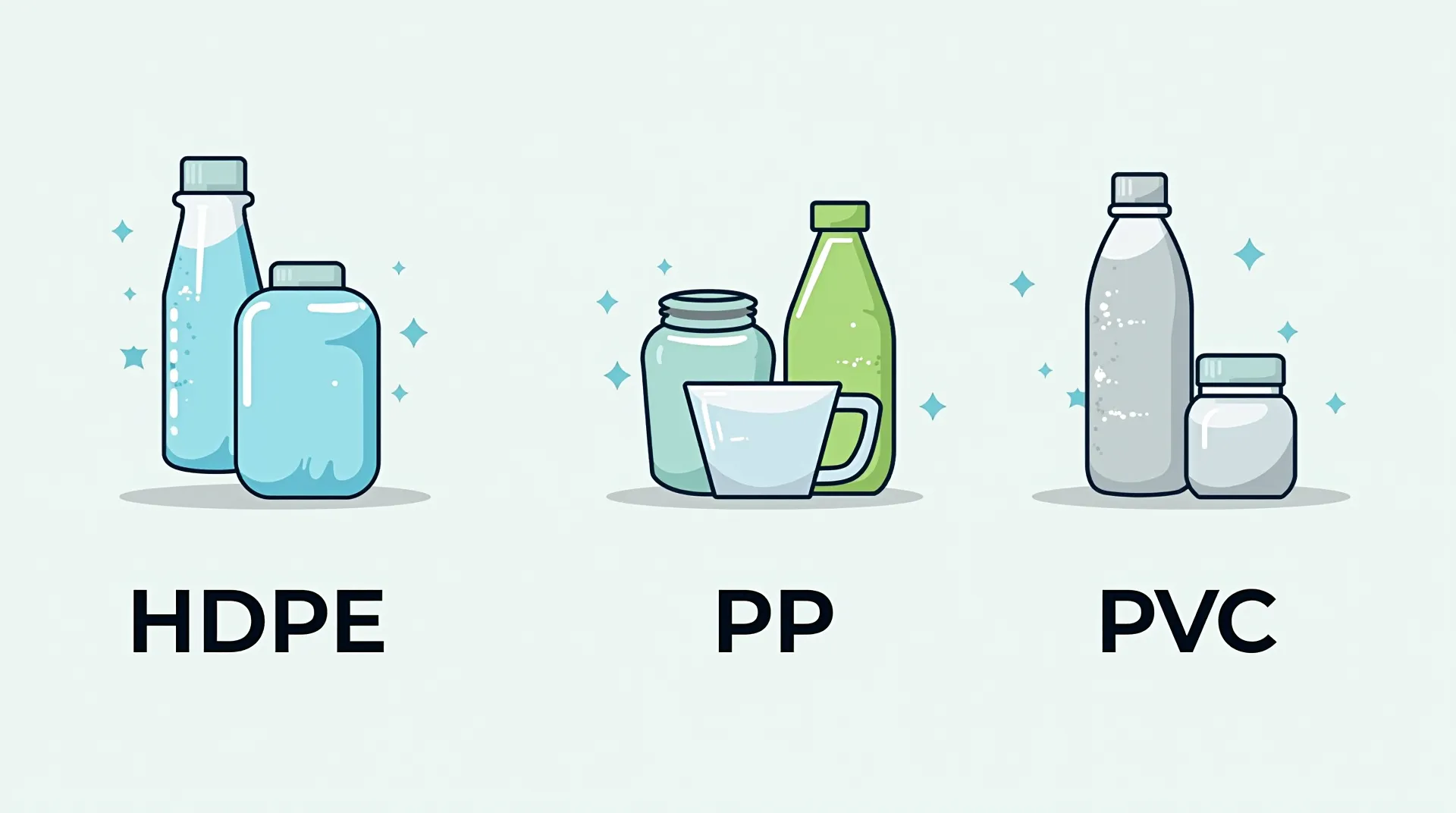
Tipuri comune de materiale plastice rigide pentru reciclare (HDPE, PP, PVC, PET și altele)
Această pagină este scrisă pentru reciclatori și cumpărători care doresc identificarea materialelor plastice rigide, înțeleg riscuri de sortare, și alegeți fluxul de lucru corect pentru reciclare—de la reducerea dimensiunii până la spălare și peletizare.
Cum să identifici materialele plastice rigide (verificări rapide pentru reciclare)
Identificarea corectă este fundamentul unei calități stabile a rezultatului. În fluxurile rigide mixte, sortarea greșită a PVC-ului este unul dintre cele mai frecvente motive pentru calitatea slabă a peleților și problemele de procesare.
1) Codul rășinii și produsul tipic
Căutați codurile de identificare ale rășinii pe ambalaj sau pe marcajele de turnare.
- HDPE (#2): sticle de detergent, butoaie, lăzi
- PP (#5): ambalaje rigide, capace, piese auto
- PVC (#3): țevi, profile, conducte de cablu
- PET (#1): sticle, tăvi (adesea necesită spălare mai mare)
2) Indiciu de plutire / scufundare (test cu apă)
O referință rapidă utilizată în multe linii de reciclare (rezultatele pot varia în funcție de materialele de umplutură/aditivi).
- De obicei plutește: HDPE, PP
- Adesea se scufundă: PET, PVC, PC, ABS (variază în funcție de formulă)
3) Puncte comune de contaminare
- Etichete și lipici: crește dificultatea spălării
- Inserții metalice: necesită separare magnetică/metală
- Ulei/grăsime: necesită spălare/uscare mai puternică
- Polimeri mixți: reduce calitatea peleților
4) Ținta de rezultat contează
- Fulgi: cheltuieli de capital mai mici, comune pentru reutilizarea internă
- Peleți: valoare mai mare, necesită alimentare stabilă și filtrare prin topire
Dacă intenționați să vindeți peleți, luați în considerare un magazin dedicat. Linie de peletizare a plasticului potrivite cu materialul și nivelul de curățenie al dumneavoastră.
Cele mai comune materiale plastice rigide: proprietăți, utilizări și note de reciclare
Mai jos sunt prezentate cele mai comune materiale plastice rigide întâlnite în fluxurile industriale și post-consum, cu note practice de reciclare care vă vor ajuta să planificați sortarea și echipamentele.
1) HDPE (polietilenă de înaltă densitate)
Surse comune: sticle, butoaie, lăzi, țevi (unele aplicații)
- Raport ridicat rezistență-densitate
- Rezistență excelentă la substanțe chimice și umiditate
- Durabil și rezistent la impact
- Adesea asociat cu PP în fluxuri rigide, dar cea mai bună performanță vine din sortarea curată
- Proces tipic: reducerea dimensiunii → spălare/uscare → fulgi sau pelete
- Calea echipamentului recomandată: Distrugător de plastic → Granulator de plastic → Linie de spălat din plastic
2) PP (Polipropilenă)
Surse comune: ambalaje rigide, capace, componente auto, articole de uz casnic
- Punct de topire ridicat (rezistență bună la căldură)
- Rezistență excelentă la oboseală (balamale/capace)
- Ușoare și rezistente la substanțe chimice
- Un bun candidat pentru producția de peleți atunci când este sortat și curățat corespunzător
- Atenție la lipiciul de etichete și la polimerii amestecați din ambalajele rigide
- Flux de lucru: Granulator + Linie de spălare → opțional Linie de peletizare
3) PVC (clorură de polivinil)
Surse comune: țevi, profile, rame de ferestre, conducte de cablu
- Rigid sau flexibil în funcție de aditivi
- Rezistență chimică și durabilitate excelente
- Izolație electrică bună
- Critic: Contaminarea cu PVC în fluxurile de PP/PE poate afecta calitatea și cauza probleme de procesare
- Necesită o sortare strictă și o abordare dedicată a procesării
- Pentru deșeurile rigide din PVC, începeți cu o reducere controlată a dimensiunii: Tocătorul / Granulator
4) PET (polietilen tereftalat)
Surse comune: sticle, tăvi, ambalaje tip scoică
- Rezistență ridicată la tracțiune, puternic și ușor
- Barieră bună împotriva gazelor/umidității
- Reciclabil pe scară largă
- Calitatea spălării este adesea cel mai important factor determinant al valorii producției
- Pot fi necesare îndepărtarea etichetelor și spălare la cald (depinde de materia primă)
- Începeți cu reducerea dimensiunii și planificarea spălării înainte de peletizare
5) PS (Polistiren)
Surse comune: ambalaje, carcase, produse de unică folosință (variază în funcție de regiune)
- Rigid și adesea transparent
- Ușor de modelat și modelat
- Izolație termică bună
- Poate fi fragil; alegerea lamei și a sitei contează
- Mențineți sortarea curată pentru a proteja calitatea rezultatului
- Abordare tipică: Granulator → curățare după cum este necesar
6) ABS (acrilonitril butadien stiren)
Surse comune: carcase pentru electronice, piese auto, bunuri de larg consum
- Rezistență ridicată la impact
- Stabilitate dimensională bună
- Ușor de prelucrat și prelucrat
- Adesea conține inserții metalice - planificați separarea
- Rezultate mai bune la peleți provin dintr-o materie primă consistentă (evitați materialele plastice mixte)
- Reducerea dimensiunii: Tocătorul → Granulator
7) PC (Policarbonat)
Surse comune: ecrane de siguranță, electronice, componente auto, articole de calitate optică
- Rezistență excepțională la impact
- Transparență ridicată (multe grade)
- Rezistent la căldură
- Calitatea variază în funcție de grad; mențineți fluxurile consecvente
- Atenție la acoperiri și materiale amestecate (afectează nevoile de filtrare a topiturii)
- Când vizați peleții, potriviți cu atenție setările de filtrare și de procesare.
Fluxuri de lucru și echipamente de reciclare recomandate (plastice rigide)
Mai jos sunt prezentate fluxuri de lucru comune utilizate în proiecte reale. Configurația exactă depinde de nivelul de contaminare, dimensiunea țintă a fulgilor și dacă produceți fulgi sau pelete.
Flux de lucru A: PP rigid/HDPE → Fulgi curați
Ideal pentru: reutilizare internă, producție stabilă de fulgi, investiție moderată
- Distrugător de plastic (opțional pentru articole voluminoase)
- Granulator de plastic (dimensiune uniformă a fulgilor)
- Linie de spălat din plastic (îndepărtați etichetele, murdăria, reziduurile)
- Uscare și depozitare (reducerea umidității, stabilizarea producției)
Flux de lucru B: PP rigid/HDPE → Peleți
Ideal pentru: vânzarea de peleți, producție cu valoare mai mare, control mai strict al procesului
- Pre-sortare și îndepărtare a metalelor
- Reducerea dimensiunii (tocător/granulator)
- Spălare și uscare (curățenie și umiditate stabile)
- Linie de peletizare a plasticului (extrudare + filtrare + tăiere peleți)
Flux de lucru C: Flux rigid mixt (risc mai mare)
Ideal pentru: operatori cu capacitate puternică de sortare și materie primă constantă
- Sortați din timp PVC-ul și alte materiale plastice incompatibile
- Folosește reducerea stabilă a dimensiunii pentru a evita blocajele din aval
- Planificați intensitatea spălării în funcție de contaminarea cu etichete/adeziv și ulei
Abordare la cheie: Un singur furnizor, un singur sistem
Ideal pentru: punere în funcțiune mai rapidă, riscuri de integrare mai mici, funcționare stabilă pe termen lung
Dacă doriți un plan complet, inclusiv configurarea echipamentelor, amplasarea și asistența pentru punerea în funcțiune, luați în considerare un Soluție completă de reciclare.
Comparație a plasticelor rigide comune, axată pe reciclare
Acest tabel se concentrează pe aspectele care îi interesează cel mai mult pe reciclatori: indicii de identificare, dificultatea sortării, nevoile de spălare și o direcție de procesare recomandată.
| Plastic | Cod rășină | Surse tipice | Sugestie de plutire/scufundare | Dificultatea de sortare | Nevoie de spălare | Direcție recomandată |
|---|---|---|---|---|---|---|
| HDPE | #2 | Sticle, butoaie, lăzi | Plutește adesea | Scăzut–Mediu | Mediu | Fulgi → pelete opționale (după spălare/uscare) |
| PP | #5 | Capace, ambalaje rigide, piese auto | Plutește adesea | Mediu | Mediu | Fulgi sau peleți (sortarea curată îmbunătățește calitatea peleților) |
| PVC | #3 | Țevi, profile, conducte | Se scufundă adesea | Ridicat | Scăzut–Mediu | Flux dedicat; evitați amestecarea cu PP/PE |
| PET | #1 | Sticle, tăvi | Se scufundă adesea | Mediu | Ridicat | Spălare intensivă; puterea depinde de curățenie |
| PS | #6 | Ambalaje, carcase | Se scufundă adesea | Mediu | Mediu | Granulare controlată; mențineți fluxurile consistente |
| ABS | — | Carcase electronice și auto | Se scufundă adesea | Mediu | Scăzut–Mediu | Planificați îndepărtarea metalului; fulgi → pelete dacă există o materie primă consistentă |
| PC | #7 (adesea “Altul”) | Scuturi de siguranță, electronice | Se scufundă adesea | Mediu | Scăzut–Mediu | Mențineți gradele constante; peleții necesită o filtrare stabilă |
ÎNTREBĂRI FRECVENTE
Care materiale plastice rigide sunt cel mai ușor de reciclat?
În multe operațiuni, HDPE și PP se numără printre cele mai ușor de reciclat materiale plastice rigide atunci când sunt sortate și curățate corespunzător. Stabilitatea producției se îmbunătățește semnificativ atunci când fluxurile sunt menținute consecvente.
De ce este contaminarea cu PVC o problemă atât de mare?
PVC-ul amestecat în fluxurile de PP/PE este o cauză frecventă a problemelor de calitate și a instabilității procesării. Dacă materia primă poate conține PVC, acordați prioritate sortării prealabile și luați în considerare procesarea dedicată.
Am nevoie de o sfoară de spălat pentru materiale plastice rigide?
Dacă materialele plastice rigide sunt reciclate sau contaminate (etichete, lipici, ulei, murdărie), este de obicei necesară o frânghie de spălat pentru a obține fulgi curați sau pelete stabile. Pentru deșeurile industriale curate, spălarea poate fi minimă.
De ce echipamente am nevoie pentru reciclarea plasticului rigid?
Majoritatea fluxurilor de lucru pentru producția de plastic rigid utilizează mai întâi reducerea dimensiunii (tocător și/sau granulator), apoi spălarea/uscarea, după cum este necesar. Pentru producția de peleți, adăugați o linie de peletizare. Vezi: Soluție completă de reciclare.
Ar trebui să produc fulgi sau pelete?
Fulgii necesită de obicei o investiție mai mică și sunt adesea folosiți pentru reutilizare internă. Peleții pot avea o valoare mai mare, dar necesită o curățenie stabilă, control al umidității și filtrare a topiturii. Dacă scopul este vânzarea de peleți, luați în considerare un magazin dedicat. Linie de peletizare a plasticului.
Aveți nevoie de o configurație recomandată pentru materialele dumneavoastră plastice rigide?
Trimiteți fotografiile materialelor, nivelul de contaminare (etichete/ulei/metal), capacitatea țintă (kg/h) și producția dorită (fulgi sau pelete). Putem pregăti o configurație completă și o ofertă de preț pe baza proiectului dumneavoastră.
