


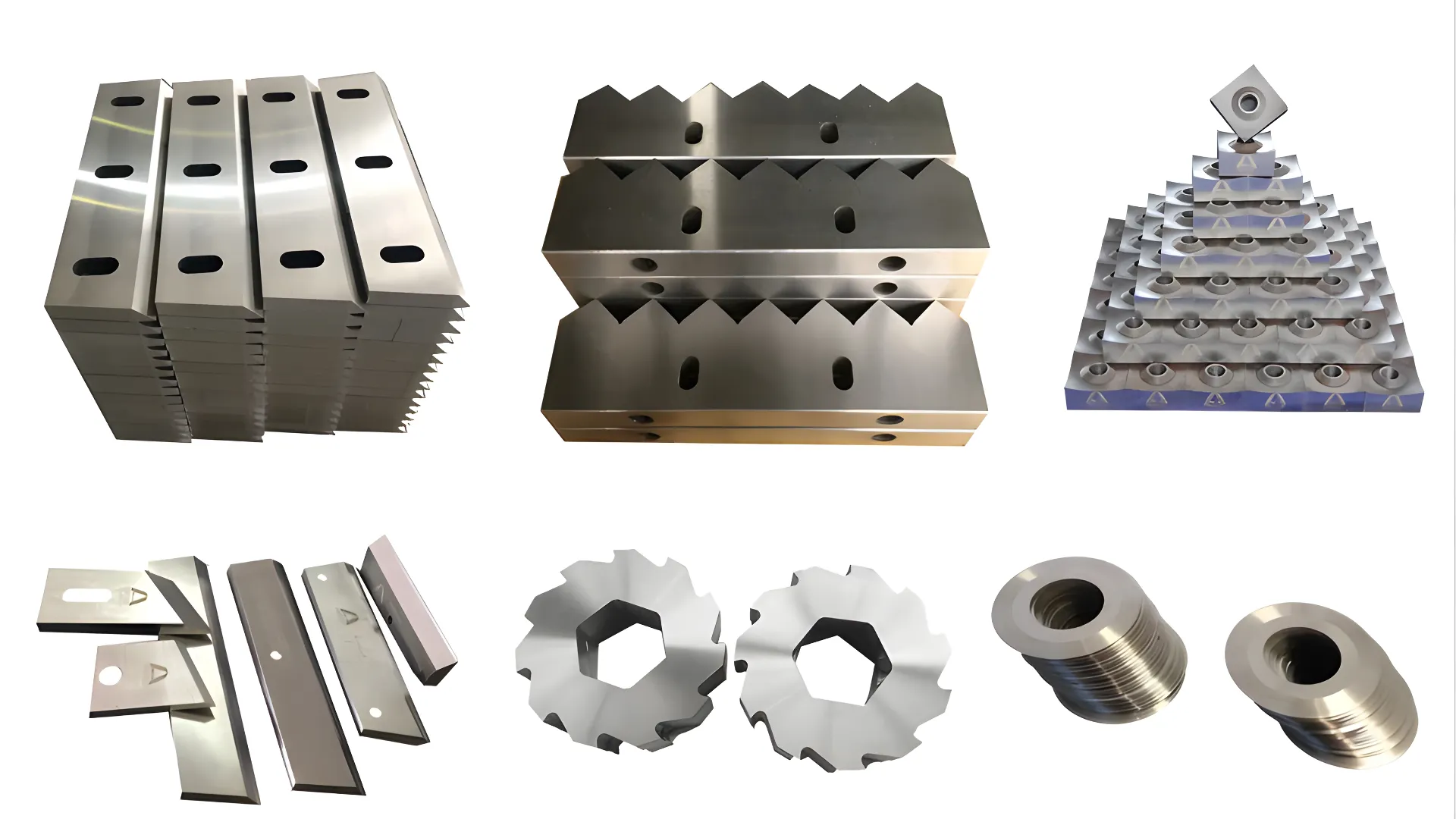
Maintaining the efficiency of your plastic recycling line depends on timely shredder blade replacement. Our replacement blades for plastic shredders are custom-machined from D2, DC53, and SKD-11 tool steel for durable, precise cutting — sized to fit your shredder’s rotor and bed-knife geometry.
Key Features of Our Replacement Shredder Blades
- Tool-steel construction: machined from D2, DC53, or SKD-11 and heat-treated for hardness and wear resistance in tough shredding.
- Precise, repeatable cut: tight tolerances keep cut size consistent and reduce load on the rotor and motor.
- Custom fitment: made to your shredder’s blade dimensions, bolt pattern, and clearance — including blades for other brands.
- Lower cost per ton: longer edge life and fewer changeovers cut blade spend and downtime.
Tool Steel Grades: D2, DC53 and SKD-11
The right steel depends on your feed. D2 balances wear resistance and toughness for general rigid plastics; DC53 adds toughness for abrasive, glass-filled material; SKD-11 suits hard plastics needing a fine, durable edge. For a full breakdown of blade steel grades and how to match them, see our guide to plastic recycling blade steels.
Shredder Blade Applications
- Plastic bottles: PET and HDPE bottles into uniform, recyclable pieces.
- Plastic film: PE/PP film and woven bags reduced to manageable size (anti-wrap geometry available).
- Rigid plastic and pipe: large-diameter HDPE/PVC pipe, profiles, and purgings.
- Mixed and bulky waste: drums, crates, and post-industrial scrap.
Custom-Machined to Fit Your Shredder
Send your blade drawing or sample, or your shredder make and model. We machine replacement blades to the exact length, width, thickness, bolt holes, and edge angle — so they drop in without modification and hold the clearance your cut quality depends on.
When to Replace Shredder Blades
Replace blades before a rounded edge starts costing you throughput. The practical signs:
- Cut size drifts larger or becomes inconsistent.
- More fines, strings, or uncut pieces in the output.
- Higher motor amp draw and more frequent jams.
- Visible rounding, chipping, or cracks on the cutting edge.
Where the edge is only dulled and the body is sound, many blades can be reground rather than replaced — see how to replace and maintain shredder blades.
Frequently Asked Questions
How often should shredder blades be replaced?
It depends on material and runtime, not a fixed interval. Abrasive or contaminated feed such as glass-filled plastic or mixed waste dulls edges faster than clean plastic. Replace when cut size drifts, fines increase, or amp draw climbs — and regrind earlier to extend total blade life.
Can I get replacement blades for another brand of shredder?
Yes. We machine blades to your drawing, sample, or shredder make and model, so they fit existing rotors without modification.
What tool steel are the blades made from?
Typically D2, DC53, or SKD-11, selected and heat-treated for your feed — abrasive material favors DC53, hard plastics favor SKD-11.
Should I replace or resharpen worn blades?
Resharpen while the blade still has usable steel above its minimum dimension and no cracks; replace once it reaches the wear limit or develops structural damage.
Inquire Now
To get the latest prices and lead times, send us a message using the form below.
See our recycling machine blades overview for the full range of blades across shredders, crushers, granulators, and pelletizers.
