


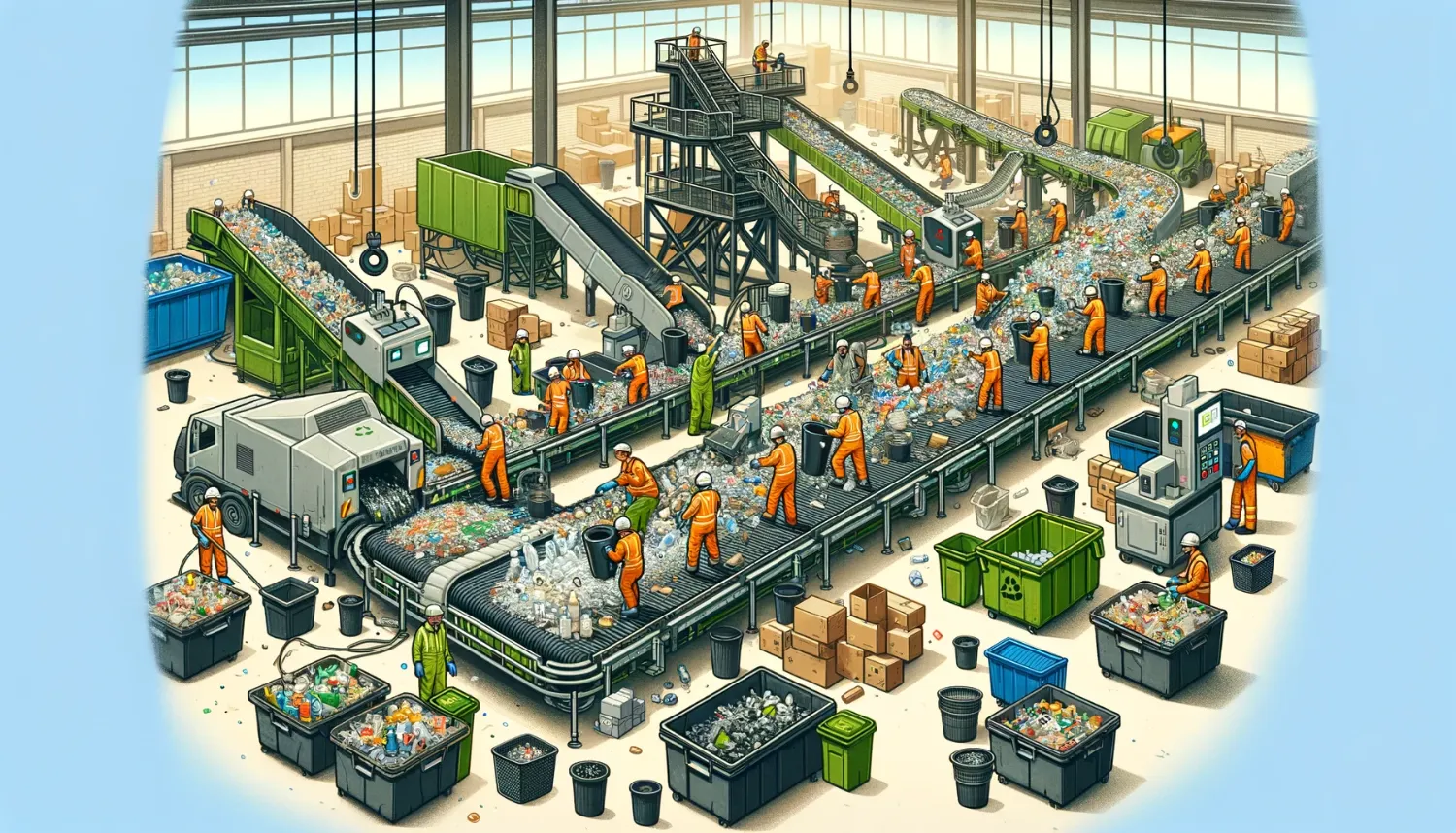
The MSW sorting process converts mixed municipal waste into recoverable metals, plastics, paper, organics, and a controlled residue stream. Plant performance depends on material characterization, line layout, separation sequence, uptime, and marketable output—not on the number of machines installed.
This article explains process design, plant layout, and ROI factors. For equipment specifications and quotations, use our MSW sorting equipment hub or the automated waste sorting plant page.
Step 1: Characterize the Incoming Waste
Design data should come from representative seasonal sampling. Record composition, moisture, bulk density, bag size, bulky-item content, glass, fines, organics, and hazardous contaminants. A line designed from a generic composition chart can be oversized in one area and bottlenecked in another.
Typical MSW Sorting Process Flow
- Receiving and inspection: unload, weigh, inspect, and remove hazardous or oversized items.
- Bag opening and metered feeding: release material without excessive size reduction and stabilize flow.
- Screening: separate fines and organics using a trommel, disc, or star screen.
- Two-dimensional / three-dimensional separation: split paper and film from containers and rolling objects where required.
- Metal recovery: recover ferrous metal magnetically and non-ferrous metal with eddy current separation.
- Optical or manual quality sorting: separate polymers, paper grades, and contaminants according to local markets.
- Residue treatment: bale recyclables, prepare RDF/SRF where permitted, and send remaining residue to disposal.
Plant Layout Principles
| Layout Area | Design Requirement | Common Failure |
|---|---|---|
| Receiving floor | Buffer volume, safe vehicle movement, fire separation | Insufficient storage causes unstable feeding |
| Conveyors | Consistent bed depth, access, guarding, spillage control | Overloaded belts reduce separator accuracy |
| Screening | Correct opening size, residence time, cleaning access | Wet fines blind screens and contaminate outputs |
| Sorting cabin | Ergonomics, ventilation, lighting, escape routes | High belt loading lowers manual recovery |
| Product bunkers | Independent storage and safe discharge | Cross-contamination between recovered grades |
| Maintenance access | Platforms, lifting points, bypasses, spare-space allowance | Minor failures stop the entire line |
How Capacity Should Be Defined
Nominal tons per hour is not enough. Define peak receiving rate, stable processing rate, annual operating hours, planned maintenance, and expected availability. Wet organic-rich waste may have the same weight but very different volume and separation behavior from dry commercial waste.
MSW Plant ROI Drivers
| Value Driver | How It Affects the Business Case |
|---|---|
| Tipping or gate fee | Revenue received for accepting waste |
| Recovered commodity sales | Value of metals, plastics, paper, and other saleable grades |
| Landfill diversion | Avoided disposal fees and possible regulatory value |
| Recovery yield | Saleable mass after contamination and quality loss |
| Labor | Sorting, supervision, maintenance, cleaning, and mobile equipment |
| Power and consumables | Conveyors, screens, separators, compressed air, baling, and wear parts |
| Uptime | Lost processing and revenue during blockage, cleaning, and repair |
| Output contracts | Quality specifications, rejection risk, and price volatility |
Simple Annual Cash Contribution Model
Annual processed tons = stable throughput × operating hours × availability
Annual contribution = gate-fee revenue + commodity revenue + avoided disposal cost − labor − power − maintenance − residue disposal − other operating costs
Simple payback = installed project investment ÷ annual contribution
Use conservative recovery and commodity-price assumptions. A credible model should remain workable when moisture rises, output prices fall, or the line operates below its target availability.
Information Needed Before Layout Design
- Representative waste composition and seasonal variation
- Daily tonnage, peak arrival pattern, and operating schedule
- Target recovered products and buyer specifications
- Local disposal cost and RDF/SRF acceptance rules
- Site dimensions, traffic route, power, fire protection, and environmental limits
- Required automation, labor availability, and expansion plan
Process trials and a mass-balance model should come before final equipment selection. The objective is not maximum theoretical recovery; it is stable production of outputs that local buyers will accept.
