


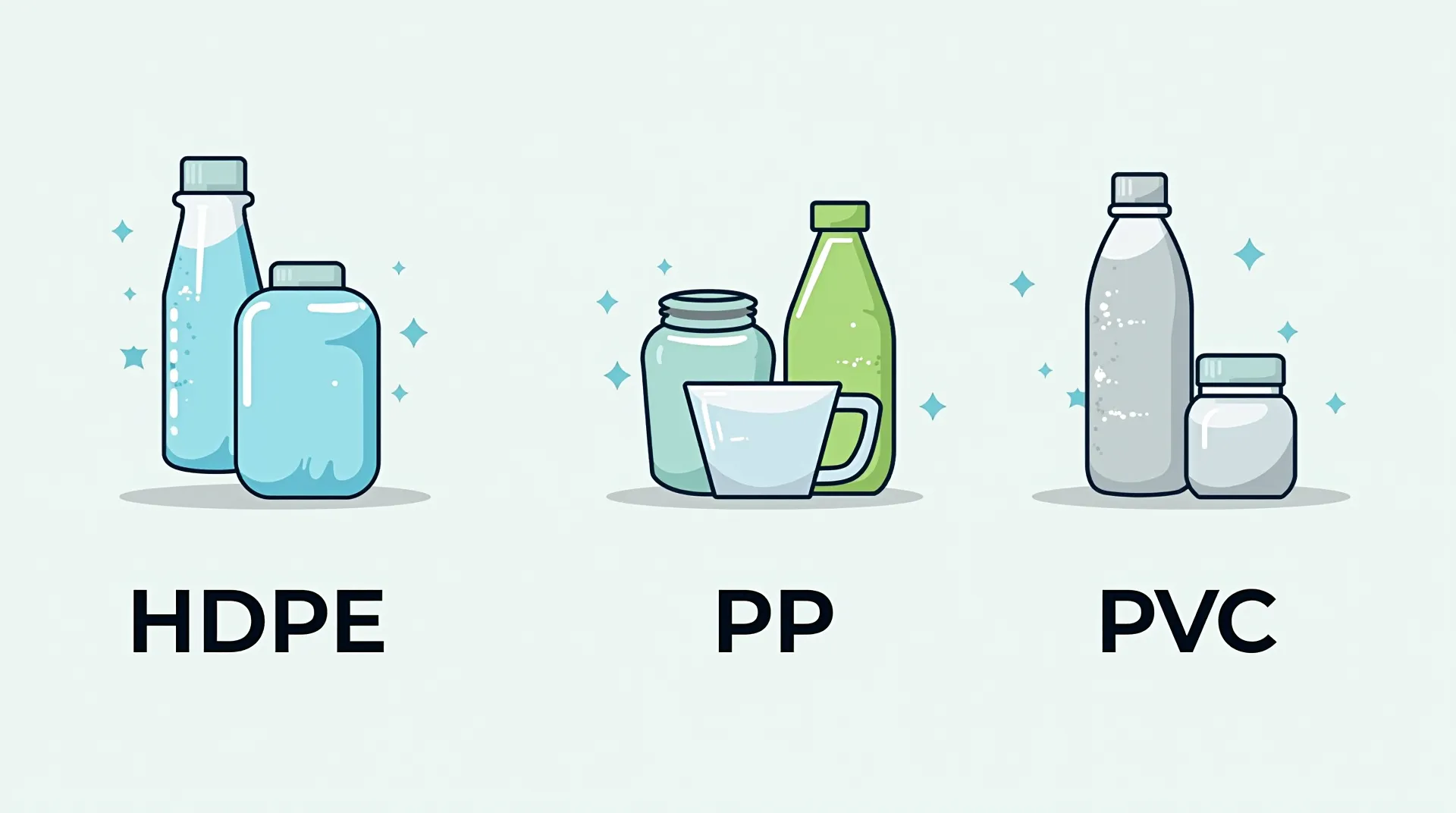
Tipos comuns de plásticos rígidos para reciclagem (HDPE, PP, PVC, PET e outros)
Esta página foi escrita para recicladores e compradores que desejam identificar plásticos rígidos, entender riscos de classificação,e escolha o fluxo de trabalho de reciclagem correto—da redução de tamanho à lavagem e granulação.
Como identificar plásticos rígidos (verificações rápidas para reciclagem)
A identificação correta é a base para uma qualidade de saída estável. Em fluxos rígidos mistos, classificação incorreta de PVC é uma das razões mais comuns para a baixa qualidade dos pellets e problemas de processamento.
1) Código da resina e produto típico
Procure as identificações da resina na embalagem ou nas marcas de moldagem.
- HDPE (#2): Garrafas de detergente, tambores, caixas
- PP (#5): Embalagens rígidas, tampas, peças automotivas
- PVC (#3): tubos, perfis, eletrodutos para cabos
- PET (#1): garrafas, bandejas (geralmente exigem maior lavagem)
2) Dica de flutuação/afundamento (teste com água)
Uma referência rápida utilizada em muitas linhas de reciclagem (os resultados podem variar de acordo com os materiais de enchimento/aditivos).
- Geralmente flutua: HDPE, PP
- Afunda frequentemente: PET, PVC, PC, ABS (varia conforme a formulação)
3) Pontos comuns de contaminação
- Etiquetas e cola: aumenta a dificuldade de lavagem
- Inserções metálicas: necessita de separação magnética/metálica
- Óleo/graxa: requer lavagem/secagem mais intensa
- Polímeros mistos: diminui a qualidade dos pellets
4) A meta de produção é importante
- Flocos: Menor CAPEX, comum para reutilização interna.
- Pelotas: Maior valor agregado, requer alimentação estável e filtração da massa fundida.
Se você planeja vender pellets, considere um espaço dedicado. Linha de granulação de plástico Adequado ao seu material e nível de limpeza.
Plásticos rígidos mais comuns: propriedades, usos e informações sobre reciclagem.
Abaixo estão os plásticos rígidos mais comuns encontrados nos fluxos industriais e pós-consumo, com dicas práticas de reciclagem para ajudar no planejamento da triagem e dos equipamentos.
1) PEAD (Polietileno de Alta Densidade)
Fontes comuns: garrafas, tambores, caixas, tubos (algumas aplicações)
- Alta relação resistência/densidade
- Excelente resistência a produtos químicos e à umidade
- Durável e resistente a impactos
- Frequentemente utilizado em conjunto com PP em fluxos rígidos, mas o melhor desempenho é obtido com a triagem limpa.
- Processo típico: redução de tamanho → lavagem/secagem → flocos ou grânulos
- Caminho de equipamento recomendado: Triturador de plástico → Granulador de plástico → Varal de Lavagem de Plástico
2) PP (Polipropileno)
Fontes comuns: embalagens rígidas, tampas, componentes automotivos, utensílios domésticos
- Alto ponto de fusão (boa resistência ao calor)
- Excelente resistência à fadiga (dobradiças/tampas)
- Leve e resistente a produtos químicos.
- Boa candidata para produção de pellets quando devidamente selecionada e limpa.
- Fique atento à cola de rótulos e polímeros mistos em embalagens rígidas.
- Fluxo de trabalho: Granulador + Linha de lavagem → opcional Linha de Pelotização
3) PVC (Cloreto de Polivinila)
Fontes comuns: tubos, perfis, caixilhos de janelas, eletrodutos para cabos
- Rígido ou flexível, dependendo dos aditivos.
- Excelente resistência química e durabilidade
- Bom isolamento elétrico
- Crítico: A contaminação por PVC em fluxos de PP/PE pode prejudicar a qualidade e causar problemas de processamento.
- Requer triagem rigorosa e abordagem de processamento dedicada.
- Para sobras de PVC rígido, comece com uma redução controlada do tamanho: Destruidor / Granulador
4) PET (Polietileno Tereftalato)
Fontes comuns: garrafas, bandejas, embalagens clamshell
- Alta resistência à tração, forte e leve.
- Boa barreira contra gases e umidade
- Amplamente reciclável
- A qualidade da lavagem é frequentemente o maior fator determinante do valor do produto.
- A remoção do rótulo e a lavagem a quente podem ser necessárias (dependendo da matéria-prima).
- Comece com a redução de tamanho e o planejamento da lavagem antes da granulação.
5) PS (Poliestireno)
Fontes comuns: Embalagens, invólucros, produtos descartáveis (varia conforme a região)
- Rígido e frequentemente transparente
- Fácil de moldar e dar forma.
- Bom isolamento térmico
- Pode ser quebradiço; a escolha da lâmina e da tela é importante.
- Mantenha a triagem limpa para proteger a qualidade do produto.
- Abordagem típica: Granulador → limpeza conforme necessário
6) ABS (Acrilonitrila Butadieno Estireno)
Fontes comuns: carcaças eletrônicas, peças automotivas, bens de consumo duráveis
- Alta resistência a impactos
- Boa estabilidade dimensional
- Fácil de usinar e processar.
- Frequentemente contém inserções metálicas — planeje a separação.
- Resultados melhores com pellets são obtidos com matéria-prima consistente (evite plásticos misturados).
- Redução de tamanho: Destruidor → Granulador
7) PC (Policarbonato)
Fontes comuns: Escudos de segurança, eletrônicos, componentes automotivos, itens de grau óptico
- Resistência excepcional a impactos
- Alta transparência (vários níveis)
- Resistente ao calor
- A qualidade varia conforme o nível; mantenha os fluxos consistentes.
- Fique atento a revestimentos e materiais mistos (afeta as necessidades de filtração da massa fundida).
- Ao produzir pellets, ajuste cuidadosamente as configurações de filtração e processo.
Fluxos de trabalho e equipamentos recomendados para reciclagem (plásticos rígidos)
A seguir, apresentamos fluxos de trabalho comuns usados em projetos reais. Sua configuração exata dependerá do nível de contaminação, do tamanho desejado dos flocos e se você produz flocos ou grânulos.
Fluxograma A: PP/HDPE rígido → Flocos limpos
Ideal para: reutilização interna, produção estável de flocos, investimento moderado.
- Triturador de plástico (opcional para itens volumosos)
- Granulador de plástico (tamanho uniforme dos flocos)
- Varal de Lavagem de Plástico (remover etiquetas, sujeira, resíduos)
- Secagem e armazenamento (reduzir a umidade, estabilizar a produção)
Fluxo de trabalho B: PP/HDPE rígido → Grânulos
Ideal para: venda de pellets, produção de maior valor agregado, controle de processo mais rigoroso.
- Pré-triagem e remoção de metais
- Redução de tamanho (triturador/granulador)
- Lavagem e secagem (mantém a limpeza e a umidade estáveis)
- Linha de granulação de plástico (extrusão + filtração + corte de grânulos)
Fluxo de trabalho C: Corrente mista rígida (maior risco)
Ideal para: operadores com forte capacidade de triagem e fornecimento constante de matéria-prima.
- Resolva o problema do PVC e de outros plásticos incompatíveis o mais rápido possível.
- Utilize redução de tamanho estável para evitar gargalos a jusante.
- Planeje a intensidade da lavagem levando em consideração a contaminação por etiquetas/cola e óleo.
Abordagem completa: um fornecedor, um sistema
Ideal para: comissionamento mais rápido, menos riscos de integração e operação estável a longo prazo.
Se você deseja um plano completo que inclua configuração de equipamentos, layout e suporte à comissionamento, considere um Solução completa de reciclagem.
Comparação de plásticos rígidos comuns com foco na reciclagem
Esta tabela concentra-se no que mais interessa aos recicladores: dicas de identificação, dificuldade de triagem, necessidades de lavagem e uma direção de processamento recomendada.
| Plástico | Código de resina | Fontes típicas | Dica de flutuação/afundamento | Dificuldade de classificação | Necessidade de Lavagem | Direção recomendada |
|---|---|---|---|---|---|---|
| PEAD | #2 | Garrafas, tambores, caixas | Frequentemente flutua | Baixo–Médio | Médio | Flocos → grânulos opcionais (após lavagem/secagem) |
| PP | #5 | Tampas, embalagens rígidas, peças automotivas | Frequentemente flutua | Médio | Médio | Flocos ou grânulos (uma seleção cuidadosa melhora a qualidade dos grânulos) |
| PVC | #3 | Tubos, perfis, condutos | Afunda com frequência | Alto | Baixo–Médio | Fluxo dedicado; evite misturar com PP/PE. |
| BICHO DE ESTIMAÇÃO | #1 | Garrafas, bandejas | Afunda com frequência | Médio | Alto | Lavagem intensiva; o valor de produção depende da limpeza. |
| PS | #6 | Embalagem, invólucros | Afunda com frequência | Médio | Médio | Granulação controlada; manter os fluxos consistentes |
| abdômen | — | Eletrônicos e carcaças de automóveis | Afunda com frequência | Médio | Baixo–Médio | Planeje a remoção de metal; flocos → grânulos se a matéria-prima for consistente. |
| PC | #7 (frequentemente “Outro”) | Proteções de segurança, componentes eletrônicos | Afunda com frequência | Médio | Baixo–Médio | Mantenha a consistência na granulometria; os grânulos requerem filtração estável. |
Perguntas frequentes
Quais plásticos rígidos são mais fáceis de reciclar?
Em muitas operações, o PEAD e o PP estão entre os plásticos rígidos mais fáceis de reciclar quando devidamente separados e limpos. A estabilidade da produção melhora significativamente quando os fluxos são mantidos consistentes.
Por que a contaminação por PVC é um problema tão grande?
A presença de PVC misturado em fluxos de PP/PE é uma causa comum de problemas de qualidade e instabilidade no processamento. Se sua matéria-prima puder conter PVC, priorize a pré-triagem e considere o processamento dedicado.
Preciso de um varal para secar plásticos rígidos?
Se seus plásticos rígidos forem pós-consumo ou estiverem contaminados (rótulos, cola, óleo, sujeira), geralmente é necessário um sistema de lavagem para obter flocos limpos ou grânulos estáveis. Para resíduos industriais limpos, a lavagem pode ser mínima.
Que equipamento preciso para a reciclagem de plásticos rígidos?
A maioria dos fluxos de trabalho com plástico rígido utiliza primeiro a redução de tamanho (triturador e/ou granulador), seguida de lavagem/secagem conforme necessário. Para a produção de grânulos, adicione uma linha de granulação. Veja: Solução completa de reciclagem.
Devo produzir flocos ou grânulos?
Os flocos geralmente exigem um investimento menor e são frequentemente reutilizados internamente. Os grânulos podem ter um valor maior, mas exigem limpeza estável, controle de umidade e filtragem da massa fundida. Se o objetivo for a venda de grânulos, considere um sistema dedicado. Linha de granulação de plástico.
Precisa de uma configuração recomendada para seus plásticos rígidos?
Envie fotos do material, nível de contaminação (rótulos/óleo/metal), capacidade desejada (kg/h) e produto final pretendido (flocos ou grânulos). Podemos preparar uma configuração completa e um orçamento com base no seu projeto.
