



Recycling long, rigid plastic extrusions is one of the most frustrating jobs in a plastics recycling plant. Standard granulators are built for bottles, film, and small rigid parts — feed them a 6-meter PVC pipe or a bundle of PP-R profiles and the machine either jams, bridges over the cutting chamber, or forces operators to pre-cut everything by hand. That manual pre-cutting step eats labor hours, creates safety risks, and throttles the entire line.
Our specialized extruded plastic granulator machines are engineered specifically for granulating long pieces of rigid plastics for recycling — pipes, sheets, boards, and other extruded profiles. It is an optimal solution for crushing PP-R, PE, and PVC pipes that are challenging to insert into most plastic granulator machines.
Not looking to granulate long, extruded plastics? Check out our standard plastic granulator machines for granulating plastic bottles, plastic films, and other rigid plastics.
Why Long Extruded Plastics Need a Specialized Granulator
Extruded products — pipes, window profiles, sheets, decking boards, cable trunking — share one awkward trait: they are long, stiff, and springy. Drop a 4-meter pipe into a conventional granulator and three things go wrong. First, the feed opening is too small, so the pipe has to be cut into short sections before it can even enter the machine. Second, long pieces tend to bridge across the rotor instead of dropping into the cutting chamber, which causes jamming and uneven loading. Third, the high impact of rigid extrusions striking standard blades accelerates wear and can damage the cutting chamber.
That is why recyclers handling pipe and profile scrap historically relied on specialized shredders for HDPE pipes or slow, labor-intensive manual cutting. An extruded plastic granulator takes a different approach: instead of forcing long material through a small throat, it gives operators an extended, angled inlet designed for feeding full-length pieces directly, and pairs it with an aggressive cutting geometry that grabs and pulls rigid extrusions into the chamber without bridging.
The result is a one-step process. Long pipes and profiles go in whole; uniform granulate comes out, ready for washing, drying, or direct re-extrusion. For operations generating steady volumes of pipe offcuts, profile scrap, or edge trim from extrusion lines, that single change can eliminate an entire pre-processing station.
Working Principle
This unusual shaped plastic granulator machine has an extended inlet set at a comfortable angle for operators to conveniently and safely insert long pieces of plastic for granulating. Its sturdy, stepped clamping blade design inside the cutting chamber allows this granulator to break and cut hard plastic material with high durability.
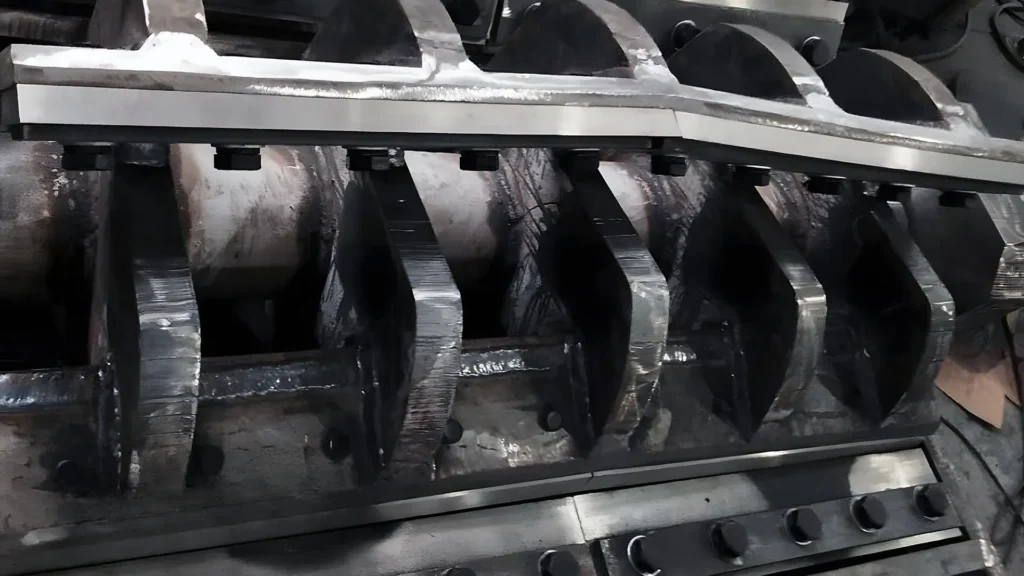
At the core of our extended plastic granulators is an open rotor attached with exceptionally sturdy 9CrSi blades in a stepped array for maximum shearing strength and crushing efficiency. As the rotor spins between 480 to 650 rpm (depending on model), the rotor blades come in contact with stationary blades inside the cutting chamber, resulting in the extruded plastic being continuously granulated until it is small enough to pass through a screen filter.
The removable filter screen has many holes between 8–10 mm at the bottom of the granulator. The filter is designed to be easily disassembled and assembled for easy cleaning. Once the plastic is small enough, it will fall through this screen filter and be extracted to the next recycling machine using a powerful blower motor.
The stepped blade arrangement is the key detail. Rather than striking the material with a flat cutting edge, the staggered 9CrSi blades bite into rigid extrusions progressively — first cracking the profile wall, then shearing it into flakes. This progressive cut reduces shock loading on the rotor, keeps power draw stable, and produces a more uniform particle size than a conventional straight-blade granulator attempting the same job.
Key Features
- Extended angled inlet — feed full-length pipes and profiles directly without pre-cutting; the comfortable feed angle keeps operators at a safe distance from the cutting chamber.
- Stepped clamping blade design — staggered stationary blades grip rigid extrusions and prevent them from bouncing or bridging inside the chamber.
- 9CrSi open rotor — high-carbon chromium-silicon tool steel blades in a stepped array deliver maximum shearing strength and long edge life on hard plastics.
- 480–650 rpm rotor speed — model-dependent speed range balances throughput with controlled cutting force for thick-walled profiles.
- Removable 8–10 mm screen — quick-release filter screen for fast size changes and cleaning; uniform granulate falls through to the collection system.
- Blower discharge — a powerful blower motor extracts finished granulate automatically to the next stage, such as a washing line or storage silo.
Materials an Extruded Plastic Granulator Handles
The machine is purpose-built for rigid extruded scrap that defeats standard granulators. Typical feedstock includes:
- PP-R pipes — hot-water pipe offcuts and installation scrap; the stepped blades crack the thick pipe wall progressively rather than shattering it.
- PE pipes — HDPE water and gas pipe sections, including large-diameter offcuts from pipe extrusion lines.
- PVC pipes and profiles — drainage pipe, conduit, and window/door profiles; for guidance on sizing the right machine for PVC pipe, see our PVC pipe shredder selection guide.
- Sheets and boards — extruded sheets, foamed boards, and decking offcuts fed lengthwise through the extended inlet.
- Edge trim and start-up lumps — continuous trim from extrusion lines and purgings that are too bulky for standard granulator throats.
Materials to keep out of this machine: heavily contaminated scrap with metal inserts (screws, reinforcement bars), which should go through a heavy-duty crusher or metal-detection stage first, and flexible films, which wrap around the rotor instead of cutting cleanly.
Additional Images
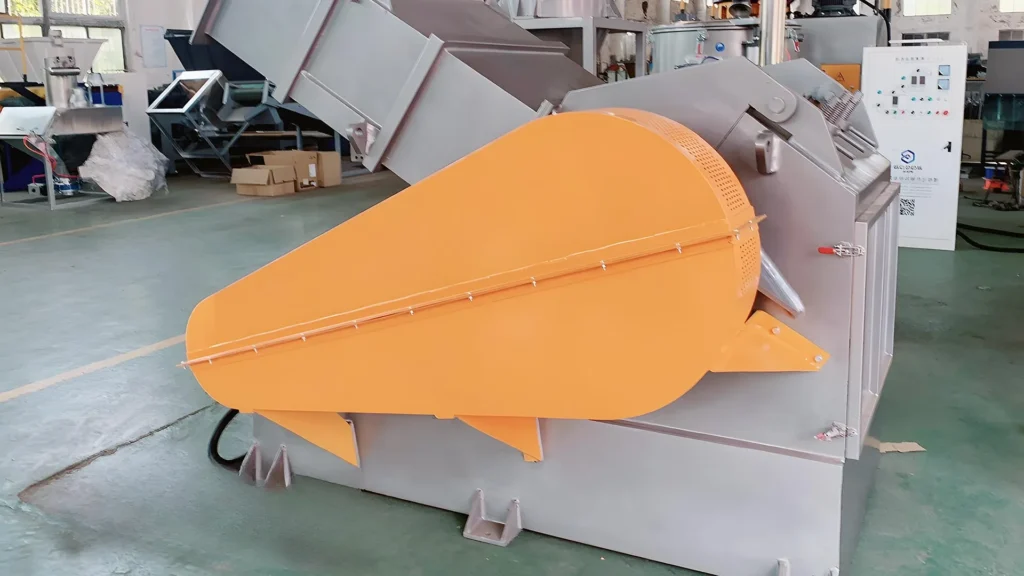
Technical Specifications
Specifications vary by model. Confirm the exact figures for your configuration before ordering — key parameters to verify are rotor diameter, motor power, maximum feed length, and screen options:
| Parameter | Typical Range |
|---|---|
| Rotor speed | 480–650 rpm (model dependent) |
| Blade material | 9CrSi tool steel, stepped array |
| Screen hole size | 8–10 mm, removable |
| Feed type | Full-length pipes, profiles, sheets via extended inlet |
| Discharge | Blower extraction to next stage |
| Warranty | 1-year limited warranty on all recycling machines |
Blade and Screen Maintenance
Rigid extrusions are abrasive, so a maintenance routine pays for itself in blade life and granulate consistency. Inspect blade edges weekly when running pipe scrap full-time — 9CrSi holds an edge well, but glass-filled or mineral-filled profiles will dull any blade faster. Most operators resharpen rotor and stationary blades in place two to three times before replacement becomes more economical than another grind.
Check the screen every shift. A partially blinded screen forces material to recirculate in the cutting chamber, which overheats the plastic and produces fines. The quick-release design means a screen swap takes minutes: keep a spare 8 mm and 10 mm screen on hand so production never waits on cleaning. Grease rotor bearings on the schedule in the manual, and verify belt tension monthly — a slipping belt drops rotor speed below the effective 480 rpm floor and causes the very bridging this machine is designed to prevent.
How to Choose the Right Machine: RFQ Checklist
Before requesting a quote, gather the following — it lets the supplier size the machine correctly on the first pass:
- Material and wall thickness — PP-R, PE, or PVC? Maximum outer diameter and wall thickness of the largest piece.
- Feed length — longest piece you need to feed whole; determines inlet configuration.
- Throughput target — kg per hour required; this sets motor power and rotor size.
- Target granulate size — 8 mm or 10 mm screen, or a custom size for your downstream process.
- Contamination level — any metal inserts, labels, or mixed materials that need pre-sorting.
- Downstream equipment — will granulate go to washing, drying, or direct re-extrusion? This affects discharge configuration.
- Power supply — voltage, phase, and frequency at your site.
If your scrap stream also includes shorter rigid parts or film alongside long profiles, ask whether a single-shaft shredder upstream makes sense — shredding bulky pieces first, then granulating, is a common two-stage setup for mixed rigid waste.
Frequently Asked Questions
What is an extruded plastic granulator?
It is a granulator designed specifically for long, rigid extruded plastics — pipes, profiles, sheets, and boards. Unlike standard granulators with small feed throats, it has an extended angled inlet that accepts full-length pieces and a stepped blade geometry that grips and cuts rigid extrusions without bridging or jamming.
What materials can it process?
PP-R, PE, and PVC pipes, window and door profiles, extruded sheets and boards, edge trim, and start-up lumps from extrusion lines. It is not suitable for flexible films or scrap containing metal inserts.
How long can the feed pieces be?
The extended inlet is designed for full-length pipes and profiles — typically several meters — fed directly without pre-cutting. Confirm the maximum feed dimensions for your specific model when requesting a quote.
What granulate size does it produce?
The standard removable screen has 8–10 mm holes, producing uniform granulate suitable for washing lines or direct re-extrusion. Custom screen sizes are available on request.
How often do the blades need maintenance?
The 9CrSi blades hold their edge well on standard pipe scrap. Inspect weekly under full-time operation; most operators resharpen two to three times before replacing. Abrasive filled materials will shorten intervals.
Can it handle profiles with metal reinforcement?
No — metal inserts will damage the blades. Profiles with steel reinforcement should go through metal separation first, or be processed on a heavy-duty crusher designed for tougher mixed feed.
What is the difference between this and a standard plastic granulator?
A standard granulator is built for small rigid parts, bottles, and film fed through a compact throat. The extruded plastic granulator adds an extended inlet for long pieces, stepped clamping blades that grip rigid profiles, and a heavier rotor — all aimed at one-step granulating of pipes and profiles that would jam a conventional machine. See our plastic granulator machine range for standard models.
See the Granulator and Request a Quote
If long pipes and profiles are bottlenecking your recycling line, see our plastic granulator machines and request a quote with your material specs — we will recommend the right inlet configuration and screen size for your feedstock. All recycling machines come with a 1-year limited warranty.
