


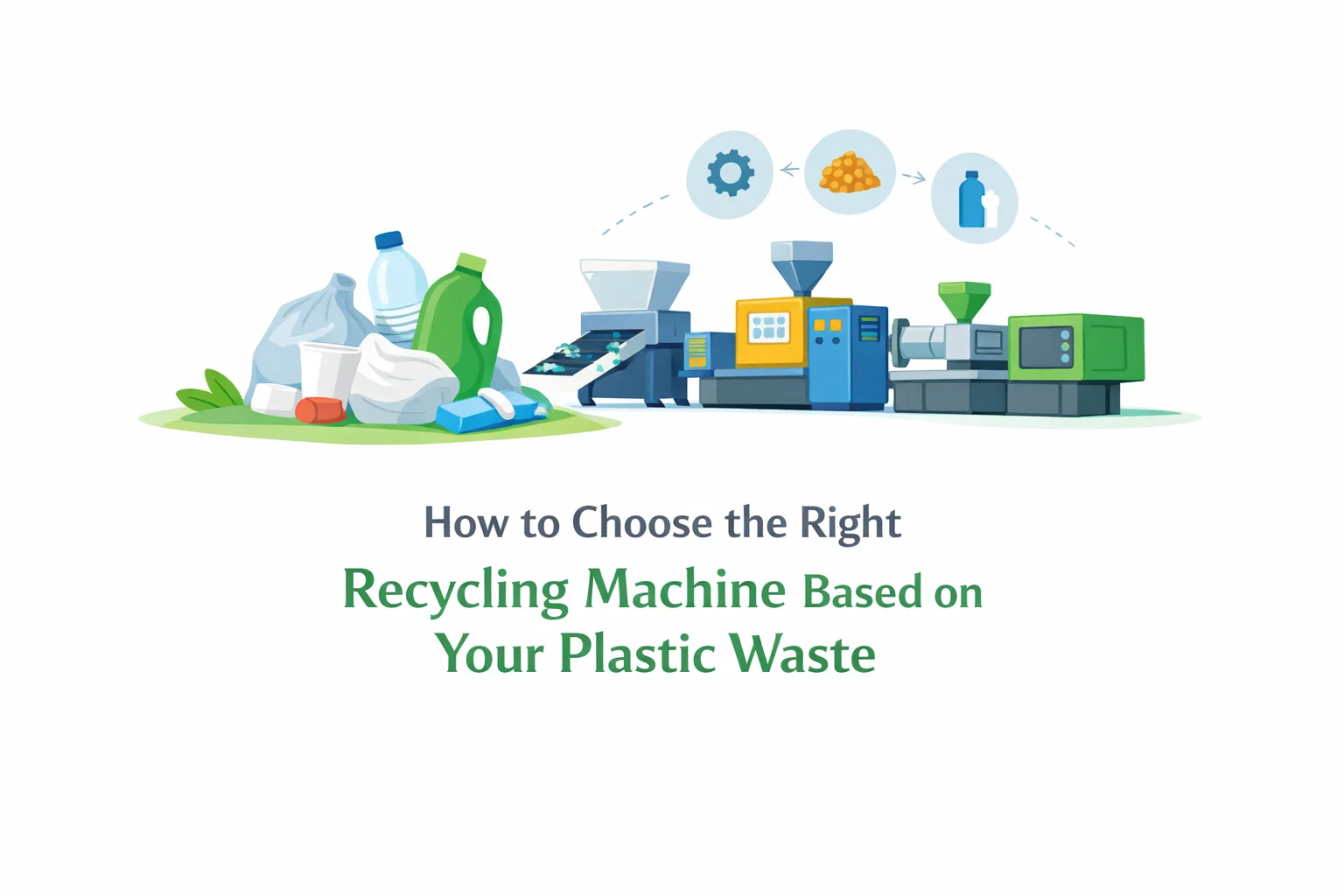
Choosing a recycling machine starts with material facts, not with catalog headlines. If machine type and waste profile do not match, you get unstable feeding, more downtime, and lower pellet quality. This guide gives a clear selection path for film, rigid, post-industrial, and post-consumer plastic waste.
If you want a quick view of system categories first, see our 플라스틱 재활용 기계 페이지.
1) Start with Polymer Identification
List your polymers before discussing machine models: PE (HDPE/LDPE/LLDPE), PP, PET, PS, ABS, PA, PC, and mixed streams. Polymer behavior during heating and filtration decides screw setup, venting demand, and pelletizing method.
- Single, clean polymer stream: simpler process layout and lower filtration load.
- 혼합 고분자: may require sorting before extrusion to protect final quality.
- Heat-sensitive materials: need tighter temperature control and steady feeding.
2) Define the Final Product First
Your target output changes the machine route:
- Shredded material only: size reduction line can be enough.
- Clean flakes: washing, separation, and drying become critical.
- 펠릿: extrusion, filtration, degassing, and pelletizing are required.
When output specs are clear at the start, supplier quotations become comparable.
3) Match Feed Form to Feeding System
Feed form controls intake stability and throughput.
- Film, bags, raffia: cutter-compactor feeding is usually the safer choice.
- Rigid regrind or flakes: direct feeder with controlled dosing often works well.
- Lumps, purgings, thick parts: pre-shredding is usually needed before extrusion.
Do not size a machine only by motor kW. Feeding behavior is often the real bottleneck.
4) Check Waste Condition: Clean or Contaminated
Material source matters: post-industrial scrap is usually cleaner than post-consumer waste. Contamination level decides if you need full washing and separation before melt processing.
- Clean, dry scrap: can move to pelletizing with lighter pretreatment.
- Dirty or mixed waste: may need pre-wash, hot wash, density separation, and drying.
- Metal, paper, labels, sand: increase wear and filtration pressure if not removed early.
5) Evaluate Printing, Adhesives, and Volatiles
Heavily printed film and laminated material can release more gas during melting. This affects venting and filter stability.
- Low print load: single degassing may be enough in many cases.
- High print or adhesive load: dual degassing and stronger filtration are often preferred.
Ask suppliers to run your samples and share melt pressure and venting behavior from the test.
6) Decide If Sorting Is Required
If your feed includes mixed colors or mixed polymers, add a sorting step before final extrusion. For high-grade output, sorting can reduce off-spec lots and customer claims.
- Polymer separation (for example, PET vs PP/PE)
- Color sorting where product grade requires tighter visual control
- Removal of difficult contaminants before pelletizing
7) Set Capacity by Real Operating Hours
Capacity planning should use actual plant schedule, not theoretical peak output. Define:
- target kg/h
- hours per shift and shifts per day
- planned maintenance stops
- future expansion window (usually 12-24 months)
A small safety margin is practical. Oversizing too much can hurt efficiency at partial load.
8) Request Comparable Quotations
Use one RFQ template for all suppliers to avoid scope mismatch.
- polymer list and percentage
- photos/videos of waste
- contamination and moisture condition
- required output and quality limits
- target throughput (kg/h)
- utility limits (power, water, space)
- commercial scope (machine-only or installed line)
- startup, training, spare parts, and warranty details
Common Selection Errors
- Choosing by purchase price alone.
- Skipping sample trials with real feedstock.
- Comparing quotes with different scope boundaries.
- Ignoring washing and drying needs for contaminated input.
- Underestimating filtration, venting, and blade wear cost.
자주하는 질문
Which machine is better for film waste?
For soft film and bags, lines with cutter-compactor feeding are commonly selected because they stabilize intake before extrusion.
Do I always need a washing line?
No. Clean, dry, post-industrial scrap may skip full washing. Dirty post-consumer feed usually needs washing and drying for stable output quality.
How do I choose between one line and multiple lines?
If materials are very different, separate lines often reduce changeover time and contamination risk. One line can work if feed is consistent and quality targets are moderate.
How important is degassing for printed film?
It is important. More ink and adhesive usually means higher volatile load during melting, which may require stronger venting and filtration.
What is the first thing to send to a machine supplier?
Send feedstock photos/videos, polymer mix, contamination level, and target kg/h. This speeds up technical matching and reduces wrong quotations.
요약
The right recycling machine is the one that matches your real waste stream, target output, and operating schedule. A clear material audit, sample trial, and scope-aligned RFQ will reduce project risk and improve production stability from day one.
