
Category Archives: Recycling News

How much does an industrial shredder cost?

A detailed view of an industrial shredder with an exploded view showing its internal components. The shredder features a white body with green accents and includes a large feed hopper on top, which is shown detached. The internal cutting mechanism and motor are visible, highlighting the machine’s robust construction and advanced engineering. This shredder is designed for efficient and reliable processing of various materials in industrial applications, ideal for recycling and waste management.
Introduction In the world of waste management and recycling, industrial shredders are indispensable tools. These powerful machines help businesses manage and reduce various materials, turning bulky waste into smaller, manageabl...

The Differences Between Shredders and Crushers: How to Choose the Right Equipment for Your Needs

a shredder, specifically designed for industrial use. This type of shredder likely features robust, rotating cutting mechanisms, which are ideal for breaking down large volumes of materials such as plastics, rubber, or waste products into smaller, manageable sizes. The bright green feeding area emphasizes the machine’s input section, where materials are introduced into the shredding system.
When it comes to recycling and waste management, understanding the differences between shredders and crushers is crucial for anyone looking to invest in machinery that optimizes processing and production efficiency. While both are...

Industrial Shredder: The Ultimate Guide to Understanding and Utilizing These Powerful Machines

A high-quality industrial shredder designed for efficient material processing. The shredder features a robust white and green construction with a large feed hopper for easy loading of materials. The machine includes a powerful motor and a strong cutting mechanism, housed in a sturdy frame with accessible maintenance doors. This shredder is ideal for industrial applications such as recycling and waste management, offering high performance and reliability in handling various types of materials.
Industrial shredders are heavy-duty machines designed to handle large quantities of material, reducing them to smaller, manageable sizes for disposal or further processing. They play a crucial role in waste management, recycling,...

Industrial Shredder Role in Plastic Recycling: Durability and Processes Explained

An industrial shredder in operation, processing a large amount of mixed plastic waste. The image shows shredded plastic materials hanging from the cutting mechanism inside a blue and yellow machine. Below, a pile of finely shredded plastic pieces accumulates, demonstrating the shredder's effectiveness. The equipment is designed for heavy-duty recycling processes, emphasizing durability and efficiency in handling various types of plastic waste. This shredding process is a critical step in converting plastic waste into reusable materials.
Introduction In the ever-evolving industrial landscape, the role of plastic recycling is pivotal, particularly in mitigating environmental impact and supporting sustainable practices. Central to this process is the use of an in...

How industrial shredders play a crucial role in the initial stages of plastic recycling

Close-up view of shredded plastic waste, showcasing a mix of black, gray, and white plastic fragments. The image highlights the effectiveness of industrial shredders in breaking down plastic materials into smaller, manageable pieces for recycling. The shredded pieces vary in size and shape, demonstrating the shredder’s ability to handle diverse types of plastic waste. This is a crucial step in the plastic recycling process, enabling further processing and reuse of materials.
Industrial shredders play an indispensable role in the recycling of plastics, serving as the foundational step in the processing chain that turns plastic waste into reusable materials. Their primary function is to reduce the size...

Discuss the different types of industrial shredders available in the market

Industrial shredders come in a variety of types, each designed to handle specific materials and shredding requirements. Here’s a look at the main types of industrial shredders available in the market, highlighting their unique f...

How to Choose the Perfect Shredder for Your Waste Processing Needs

The picture shows a type of industrial shredding machine, specifically a rotary shear shredder. This machine features a set of counter-rotating blades with hooked teeth that are designed to pull material into the cutting chamber, effectively shredding and reducing the size of the material processed. The blue frame around the shredder indicates the heavy-duty construction typical of such equipment, used for recycling or waste management purposes, such as processing plastics, metals, or waste materials into smaller fragments.
Introduction: In the realm of waste management, selecting the right shredder is paramount for efficient processing and recycling. Whether you’re dealing with plastic, tires, or hard drives, having the appropriate shreddin...

Innovations in Plastic Granulators That Are Revolutionizing the Recycling Industry

The picture shows an industrial control panel or system console. It has a large array of buttons, indicator lights, digital displays, knobs, and switches that appear to be used for operating and monitoring some kind of machinery or manufacturing process. The control panel has various colored buttons (red, blue, orange, yellow) likely representing different functions or commands. There are numeric digital readouts displaying values like temperatures or measurements. The overall setup suggests this is the user interface for controlling complex industrial equipment or an automated production line.
In recent years, the recycling industry has witnessed a surge of innovations in plastic granulators that are transforming the way we process and recycle plastic waste. These cutting-edge advancements are not only improving the eff...

A Comprehensive Guide to Maintaining and Extending the Lifespan of Your Plastic Granulator

The image appears to show part of a machine used for processing materials. It specifically features a metallic rotor or cutting blade covered in processed material, possibly indicating that it's part of a plastic granulator or shredding machine. This machinery is typically used in recycling or manufacturing settings to break down plastic or other materials into smaller granules for reuse or further processing. The worn and varied appearance of the material on the rotor suggests a collection of different shredded substances.
Plastic granulators are essential machines in the plastic recycling process, breaking down plastic waste into small, uniform granules that can be reused in the production of new plastic products. To ensure that your plastic granul...

Guide to Choosing the Best Hard Drive Shredder

there are two models of hard drive shredders, labeled EB-300 and EB-400. Both models are shown with their dimensions. For the EB-300 model: It is 108 cm wide, 114 cm tall, and 570 cm long. For the EB-400 model: It is 118 cm wide, 124 cm tall, and 65 cm long. These dimensions provide an idea of the physical size of each shredder model, which can be useful for determining the space requirements for installation. The image also indicates different design elements and capacities between the two models, possibly suggesting varied performance levels or intended usage scenarios. If you need more specific details or have any other questions about these models, feel free to ask!
Introduction: Data security is crucial in today’s digital world. Simply deleting files may not be enough as sensitive data can still be accessible. A hard drive shredder is a specialized piece of equipment designed to phy...

Unveiling the Essentials: Plastic Granulators vs Plastic Crushers

The picture shows a comparison between two types of industrial machinery: a Granulator and a Crusher. On the left side of the image is the Granulator, which is a long, complex machine designed to cut or shred material into smaller pieces. On the right side of the image is the Crusher, which is enclosed in a green safety structure and is used to compress and break down materials into smaller, manageable pieces. The text "vs" in the center suggests a comparison or evaluation of their functions or efficiencies in processing materials.
Decoding the Crucial Tools in Recycling Operations In the fast-paced world of recycling, where efficiency meets innovation, the spotlight often lands on two heavyweight champions: plastic granulators and plastic crushers. As th...

Transforming Waste into Wonder: The Revolutionary Expansion of Smile Plastics

a worker observing an industrial process where a stream of plastic flakes or pellets is falling into what seems to be a collection bin or hopper. The worker is wearing personal protective equipment, including a high-visibility vest and hearing protection, which suggests a focus on safety in a potentially noisy environment. This scene could be part of a plastic recycling operation where shredded plastic materials are being processed further. After being washed and shredded into flakes, plastics are often sorted by type and color, then melted down and extruded into pellets, which serve as the raw material for manufacturing new plastic products. The machine from which the plastic materials are falling could be part of a pelletizing line, or it might be a part of a sorting system where materials are sifted and separated. The continuous flow of material indicates an automated and efficient recycling process, vital for handling large quantities of material in a recycling facility.
Transforming plastic waste into valuable building materials, Smile Plastics has made a profound impact on the recycling and design industries. Their expansion not only triples their production capacity but also serves as a beacon...

Understanding the Different Types of Plastic Granulators: Which One Suits Your Recycling Needs?

The image shows an industrial machine, which appears to be a plastic granulator or extrusion machine. This equipment is commonly used in the plastic processing industry for recycling or creating plastic pellets. It includes components like a hopper for feeding plastic material, an extrusion chamber, and a motor, which drives the extrusion process. The processed plastic is typically melted, extruded, and formed into pellets or other shapes.
In today’s world, where plastic waste is a growing concern, recycling has become more crucial than ever. One of the key components in the plastic recycling process is the granulator, a machine that breaks down plastic waste...

Tackling Contamination: The Evolution of Advanced Plastic Washing Systems

The image shows a large industrial setting that appears to be part of a plastic recycling washing system. These systems are integral to recycling operations where plastics need to be cleaned thoroughly to remove contaminants, residue, or labels before they can be processed further. In the photo, you can see multiple conveyor belts and sorting stations that systematically transport and separate different types of plastics. The belts likely lead to washing units where the plastic is cleaned, often using a combination of mechanical and chemical processes. The color-coded conveyor belts might be for sorting plastics by type or color, which is important for recycling as different types of plastics have different processing requirements and market values.
The advent of plastic has undeniably made our lives more convenient, yet its environmental repercussions are increasingly concerning. While traditional recycling efforts have progressed, the challenge of recycling certain plastics...

Making Recycling More Cost-Effective with AI: Insights from NIST Research

Workers at a recycling facility sort and separate recycled plasti
Recycling can be a significant expense for local governments, but AI might help cut those costs and potentially increase recycling rates. Researchers at NIST are working on making recycling more efficient and less expensive. Ev...

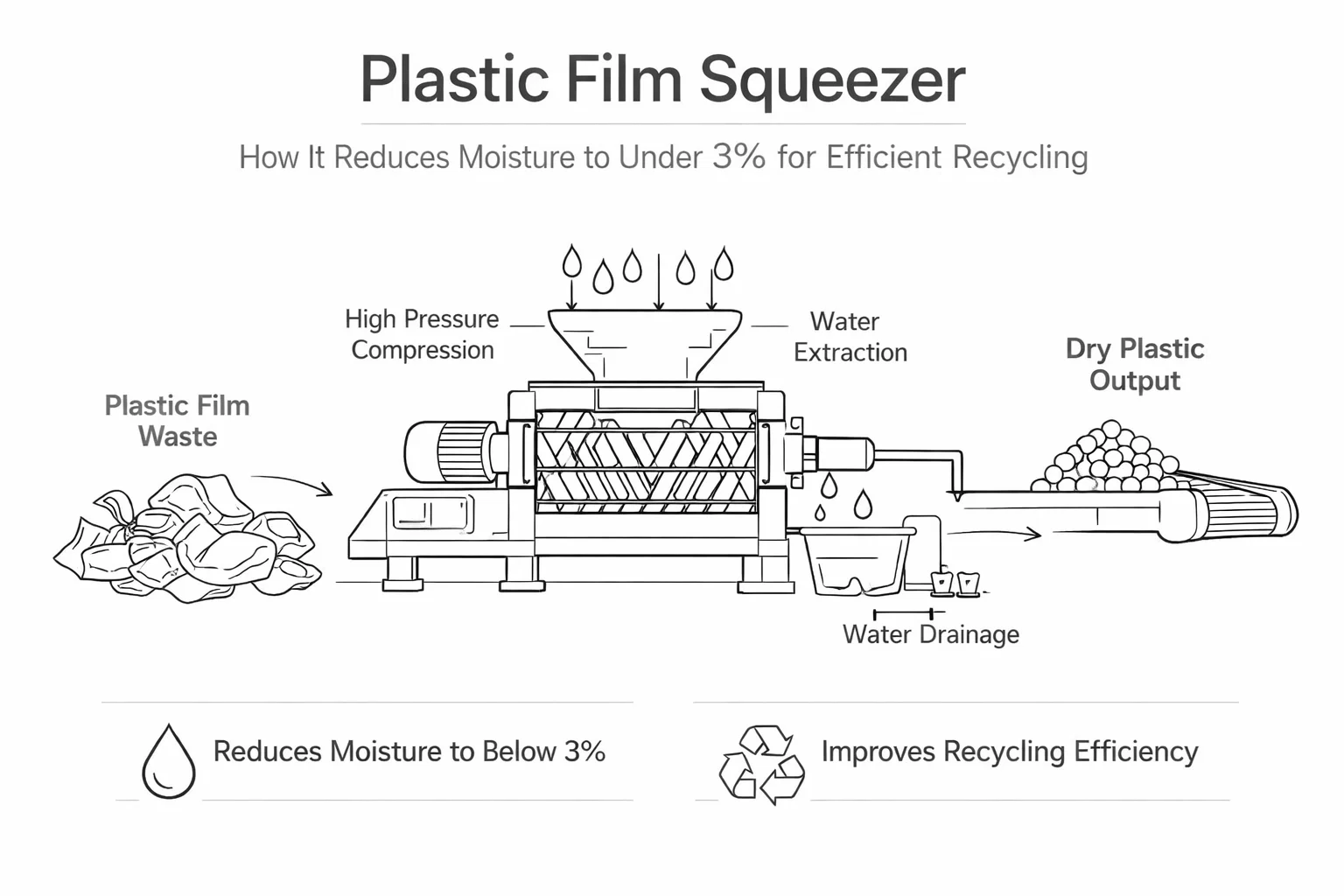
Unwrapping the Future of Recycling: The Plastic Film Squeezer’s Role in the Circular Economy

a part of a recycling line. Visible is a circular saw or cutting wheel covered with plastic debris, suggesting that it has been used to chop or grind plastic material. Such machinery is typically used to reduce the size of plastic waste to make it easier to process in later stages of recycling, like washing, pelletizing, or densification. The background includes more industrial equipment and a conveyor system, indicating this is part of a larger processing facility. Safety measures like guards and emergency stops seem to be in place, which are essential for operating heavy machinery.
The escalating crisis of plastic waste demands innovative solutions that not only recycle but also contribute to a circular economy. The “Plastic Film Squeezer” stands out as a beacon of progress in this domain, offeri...

Trend Analysis of the Global Plastic Recycling Machine Market

large bales of compressed plastic waste, which are typically prepared for recycling. These bales are formed after the sorting and cleaning processes, where different types of plastics are compressed into manageable blocks for easier transport and further processing. The variety of colors within each bale indicates a mix of different plastic items, which suggests that these bales may be destined for a facility that will further sort and recycle the material into new plastic products. This is a common practice in the recycling industry to reduce the volume of waste, making it more cost-effective to transport materials to recycling plants. Recycling facilities often use balers to compact the sorted recyclable materials into dense, tied bales. The bales conserve space during storage and transport, and their uniform shape makes them easier to handle and process
The global plastic recycling machine market is experiencing significant growth, driven by heightened awareness of environmental sustainability and the increasing demand for recycled plastics across various industries. With an anti...

Unlocking Business Efficiency with Plastic Recycling Machines: A Sustainable Approach

In today’s environmentally conscious market, businesses are increasingly turning to plastic recycling machines as a way to improve sustainability and profitability. This article delves into successful case studies across var...

AI Solutions to Drive the Growth of World Trade in Recyclables

AI solutions to drive the growth of world trade in recyclables
In an era where sustainability and environmental conservation have become paramount, the recycling industry is at the forefront of global efforts to reduce waste and promote the circular economy. Artificial intelligence (AI) is re...

The Philippines’ Plastic Predicament: A Crisis and Opportunity Unveiled

The Philippines' Plastic Predicament: A Crisis and Opportunity Unveiled
In a revealing study by Utility Bidder, a UK-based independent organization, the Philippines has been identified as the leading contributor to marine plastic waste globally, with an alarming 350,000 tons of plastic entering the oc...

Revolutionizing Recycling: The Impact of the Plastic Film Squeezer

In the quest for more efficient recycling methods, the Plastic Film Squeezer emerges as a game-changer, transforming the way we handle and recycle plastic films. This innovative technology is not just an advancement; it’s a...

Caglia Environmental Leads in Advanced PET Recycling with AI and Robotics

a man in a hard hat and reflective jacket stands in front of sort
In a significant leap towards enhancing polyethylene terephthalate (PET) recycling, Caglia Environmental, based in Fresno, California, has harnessed artificial intelligence and robotics technology. This initiative, supported by Th...

The Future of Plastic Recycling Machine Technology: Innovations and Price Considerations

a close-up view of a plastic granulator or shredder, focusing on the cutting chamber where the rotating blades are visible. These blades are instrumental in breaking down plastic into smaller pieces as part of the recycling process. The granulator's blades have plastic residue on them, suggesting that the machine has been actively used to process materials. The presence of rust and wear on the components indicates that the machine may be well-utilized or in need of maintenance to ensure optimal performance. The design of the rotor and the positioning of the blades are crucial for the efficiency and effectiveness of the granulation process. Proper maintenance, including regular cleaning and sharpening of the blades, is essential to keep the machine running smoothly and to prevent contamination of the recycled material.
The plastic recycling industry is witnessing a transformative era with the advent of advanced technologies that promise to revolutionize waste management and recycling processes. As the global community becomes increasingly aware...

Advances in PET Bottle Recycling Technologies

show the interior of a recycling facility, where workers are sorting through materials on a conveyor belt. This is likely a part of the initial sorting stage in a recycling process where workers separate different types of recyclable materials by hand. The facility seems to focus on the recycling of PET bottles, which are commonly used for beverages and other consumer products. The conveyor belt system is designed to move materials through the facility so that they can be sorted, cleaned, shredded, and eventually recycled into new products. The large bags and containers visible in the image suggest a collection of sorted materials ready for the next step in the recycling process. Manual sorting is a critical step in the recycling process as it ensures the purity of the materials being recycled, which is essential for high-quality recycling outcomes. The presence of workers in protective clothing, such as gloves and hats, indicates the emphasis on safety within the facility.
The quest for sustainable solutions in the plastic recycling industry has led to significant advancements in PET bottle recycling technologies. With the increasing demand for eco-friendly practices, the development of advanced &#8...

Lagos Leads in Environmental Protection: A Ban on Single-Use Plastics

Embracing Sustainable Waste Management The ban on single-use plastics and Styrofoam in Lagos is not just an environmental statement; it’s a call to action for innovative waste management solutions. As manufacturers of state-...

Cabinet Transforming Healthcare: Eco-Friendly Prescription Bottles Aim to Reduce Waste

With an astonishing 194 billion prescription bottles produced yearly, most of which are discarded, Cabinet is pioneering a sustainable solution to this environmental challenge....