


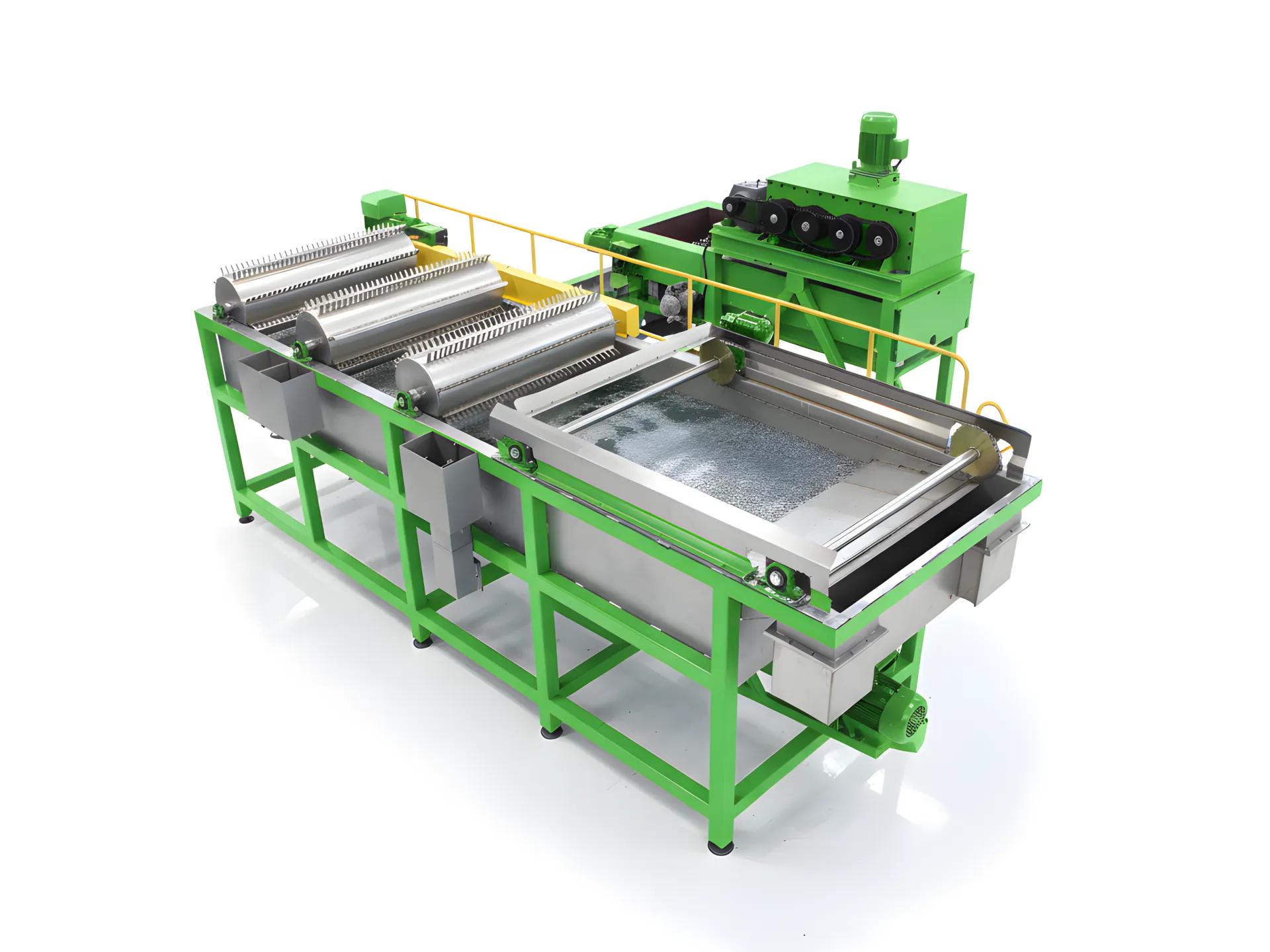
Sink-Float Tank System for PET Recycling
The sink-float separation tank is a core purification stage in PET bottle recycling, designed to remove floating PP and PE contaminants from heavier PET flakes through density-based separation in water.
It improves final flake purity, stabilizes downstream hot washing and drying, and supports higher-value rPET output.
- Separates PET from PP, PE, and label residues by density.
- Provides extra soaking and washing time during purification.
- Available in custom lengths and widths for different throughput targets.
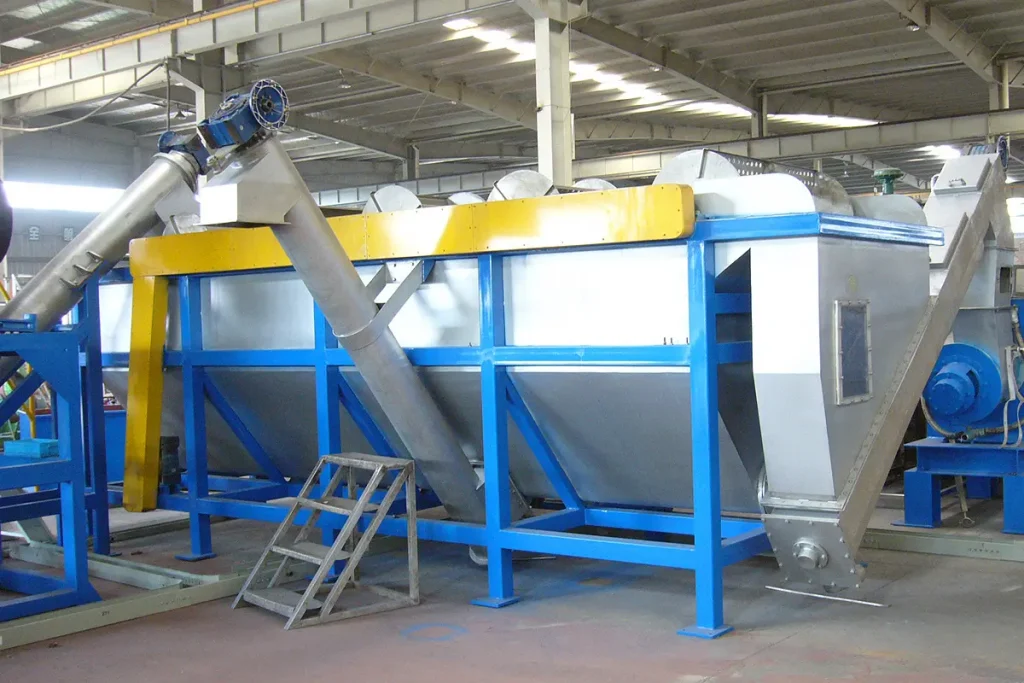
Working Principle for PET Flake Purification
Water acts as the separation medium: heavier PET sinks while lighter caps and label fragments float to the surface for removal.
PET Flakes Sink
Because PET is denser than water, the valuable flakes settle to the bottom and are collected by the discharge conveyor.
Contaminants Float
PP and PE bottle caps, label pieces, and other light contaminants remain on the surface for removal.
Key Advantages
A critical separation stage for improving rPET flake quality before drying, storage, or pelletizing.
High PET Purity
Removes a significant amount of PP and PE contamination from bottle caps and label fractions.
Dual-Function Process
The system separates by density while also providing an additional wet cleaning stage.
Optimized Soaking Time
Tank lengths from 4 to 6 meters allow more complete settling and more stable separation.
Durable Construction
Type 304 stainless steel is used on key internal sections for corrosion resistance and long service life.
Technical Specifications for PET Recycling
| Specification | Details |
|---|---|
| Interior Width | 1500 mm to 2000 mm |
| Total Length | 4 to 6 meters |
| Interior Material | Type 304 stainless steel |
| Exterior Frame | Carbon steel |
| Screw Conveyor Motors | 5.5 kW + 3.7 kW |
| Rotating Drum Motors | 0.37 kW + 2.2 kW |
Warranty & Installation
1-Year Warranty
Includes core equipment coverage with spare-parts support and technical follow-up.
Installation Support
Engineers can assist with site layout, setup, and commissioning to optimize separation performance.
Frequently Asked Questions
What is the main contaminant this tank removes from PET flakes?
The primary contaminants are plastic bottle caps and label fragments made from PP or PE. These float while the heavier PET flakes sink.
Why is a longer tank better?
A longer tank provides a longer residence time in water, allowing PET flakes to settle more completely and improving separation efficiency.
Can this tank be customized for my facility?
Yes. Tank dimensions and motor configurations can be adjusted to match throughput requirements and facility layout.
Inquire Now
Send your throughput target and facility requirements to receive pricing, lead time, and a recommended tank configuration.
