


Chain Waste Conveyor
A chain waste conveyor is a heavy-duty conveying system designed to transport bulky, abrasive, and irregular waste materials through recycling plants, waste management facilities, and industrial processing lines.
- Suitable for heavy loads and difficult waste streams that require stable mechanical conveying.
- Can be configured for municipal waste, recyclables, industrial waste, and construction debris.
- Customizable in length, width, loading points, and discharge layout for different plant workflows.
Heavy-Duty Chain Conveyor Overview
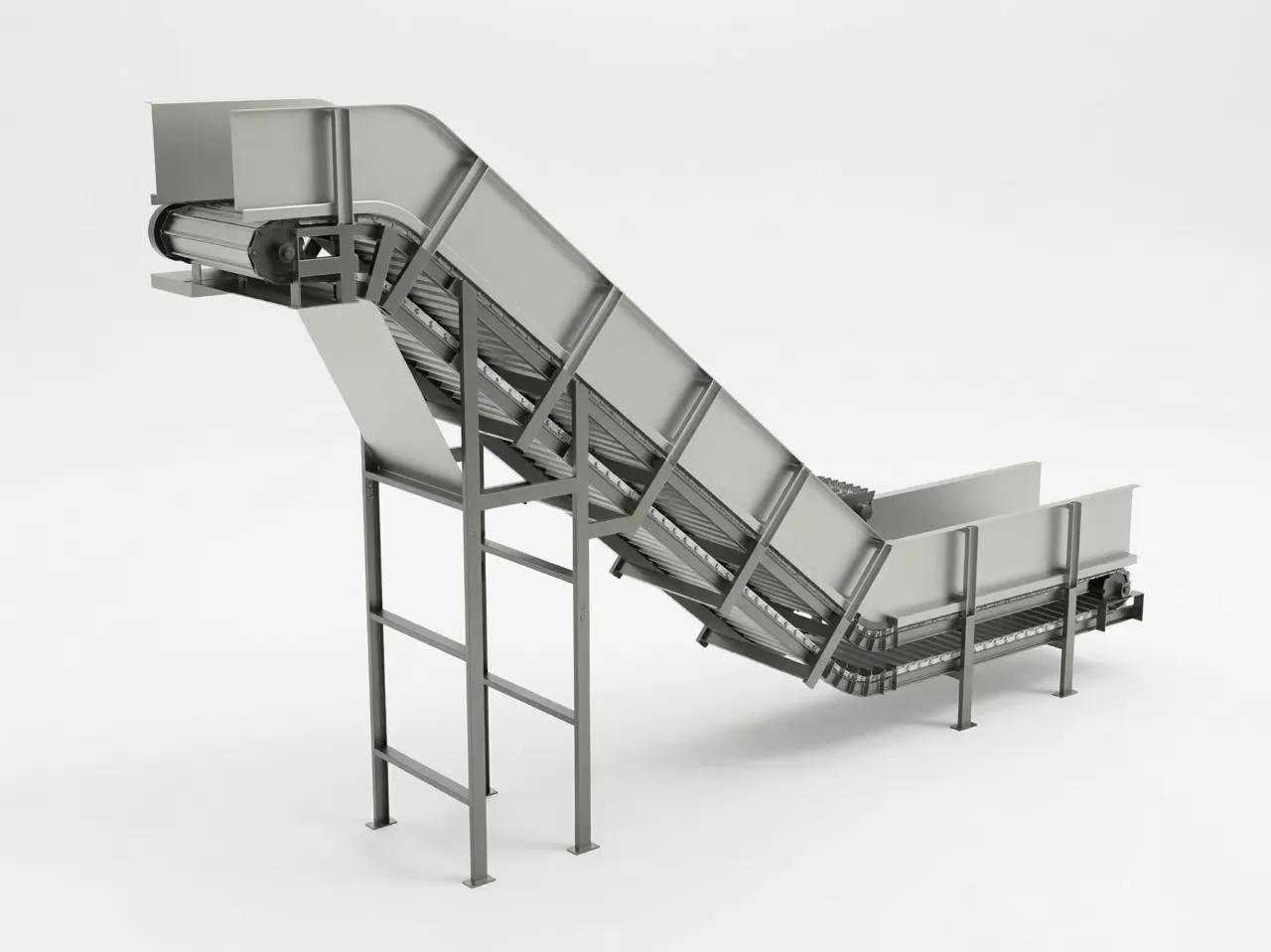
Heavy-Duty Waste Conveying System
The chain waste conveyor is built to move bulky and heavy waste streams between sorting, processing, and discharge stages with stronger mechanical support than light-duty conveying systems.
Plate Chain Waste Conveyor in Action: Video
Also called a heavy-duty plate chain conveyor, this design uses hardened plate chain, sprockets, and a reinforced frame to move abrasive, bulky, and high-load materials where rubber belts fail too quickly.
Chain Conveyor Structural Features & Design
Heavy-gauge steel frames, sprockets, and hardened plate chain links for continuous high-load duty.
Configured for demanding tonnage and abrasive bulk streams that overload light-duty belt conveyors.
Straight runs, inclines, and plant-specific loading/discharge points for recycling and waste lines.
Purpose & Role in Waste Processing Lines
The chain waste conveyor is an essential conveying component in waste management and recycling facilities, used to move heavy material streams safely and consistently between different process stages.
It is designed for continuous transfer of municipal, industrial, and recyclable waste between sorting, processing, storage, and discharge stages — without relying on light-duty belt systems that struggle with bulky or abrasive loads.
Moves waste streams along a controlled path with stable traction and predictable loading/discharge behavior for plant layouts.
The chain-driven design handles bulky, abrasive, and heavy waste that would challenge lighter conveyor designs.
Key Chain Conveyor Mechanical Components
The core element that drives the conveyor and is built to handle heavy-duty waste loads.
Supports the system structurally and guides the chain and material flow.
Motors and gearboxes provide the power needed to move the chain and maintain stable conveying speed.
Designed according to plant workflow to control where waste enters and exits the conveyor.
Manages operation, speed, and direction according to process requirements and site safety logic.
Working Principle & Material Handling Process
A heavy-duty chain loops around sprockets and carries waste along the conveying path while maintaining reliable movement for bulky and heavy material streams.
-
Load Waste Material
Waste is fed onto the conveyor through a loading zone designed for the upstream equipment or manual loading point.
-
Chain-Driven Movement
The chain moves around sprockets and carries the waste along the predetermined path with stable traction.
-
Controlled Transfer
The conveyor transfers waste to sorting, processing, storage, or discharge points as required by the line layout.
Waste Handling Applications & Materials
-
Waste Management Facilities
Transports waste for sorting, processing, and disposal in municipal and commercial waste plants.
-
Recycling Plants
Moves recyclable materials between separation, sorting, washing, or baling stages.
-
Industrial Plants
Used in manufacturing and industrial settings for waste removal and process handling.
-
Construction and Demolition Sites
Handles bulky construction debris and mixed demolition waste with stronger conveying support.
Key Advantages of Plate Chain Conveyors
-
Durability
Built to withstand heavy loads and abrasive waste streams in demanding operating environments.
-
Efficiency
Streamlines waste transport and reduces interruptions between processing stages.
-
Versatility
Can be used across a wide range of waste materials and plant configurations.
-
Customization
Can be tailored to specific operational requirements, including length, width, and path layout.
Chain Conveyor Maintenance & Safety Standards
Regular inspection, lubrication, and safety checks are essential to maintain long-term reliability and safe operation.
Inspect the chain, lubricate moving parts, monitor wear points, and keep the frame and drive components in proper condition.
Ensure guards and emergency stops function correctly, and train operators in normal handling and emergency procedures.
Engineering Considerations & Custom Sizing
Plate chain systems are robust, but layout, budget, and site conditions should be reviewed before final design.
Heavy-duty plate chain conveyors typically cost more than light belt systems, but reduce belt replacements under abrasive loads.
Allow enough length, access, and discharge clearance for installation, maintenance, and safe walkways.
Chain drives can generate noise; use guards, emergency stops, and site-appropriate noise control where required.
Reliable Conveying for Demanding Waste Operations
The chain waste conveyor is a practical and durable conveying solution for modern recycling and waste management operations, combining strong load-handling ability with flexible project customization.
Warranty & Installation
-
Warranty Coverage
Standard warranty coverage is available for supported machine components and manufacturing defects.
-
Installation & Support
We provide installation guidance, commissioning support, operator training, and spare parts service according to project scope.
Request a Chain Waste Conveyor Quote
To get the latest prices and lead times, send us a message using the form below.
