


Choosing the right industrial plastic shredder is one of the most important decisions in a recycling line. The shredder controls feedstock size, protects downstream equipment, stabilizes capacity, and often determines how smoothly the whole plant runs.
This guide explains how recycling plants can compare shredder types, capacity, cutter design, feeding methods, safety features, and integration with washing, granulation, or pelletizing systems before requesting a quotation.
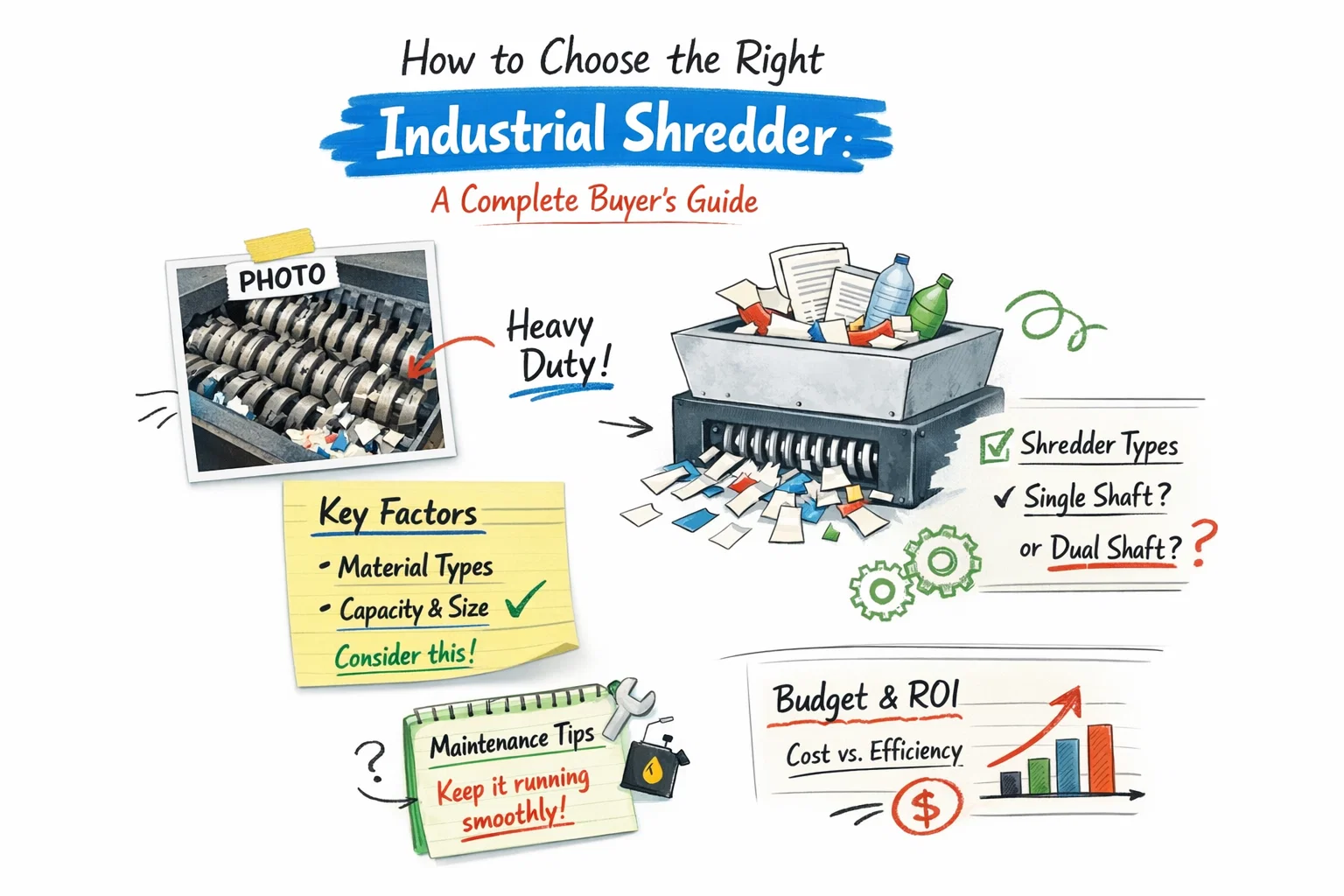
What Is an Industrial Plastic Shredder?
An industrial plastic shredder is a heavy-duty size reduction machine used to cut large plastic waste into smaller, more manageable pieces. It is commonly used before granulators, washing systems, drying systems, or pelletizing lines.
Unlike a small crusher or granulator, a shredder is designed to accept bulky, irregular, or difficult plastic waste such as purgings, pipes, films, woven bags, barrels, sheets, and mixed post-consumer materials.
Why Shredding Matters in Plastic Recycling
A well-selected shredder improves the stability of the entire recycling process. Oversized or irregular waste can jam conveyors, overload granulators, reduce washing efficiency, and create inconsistent output quality. Pre-shredding reduces these risks.
- Improves feeding consistency into granulators or washing lines.
- Reduces the risk of large pieces damaging downstream equipment.
- Helps operators control particle size before further processing.
- Supports more stable throughput and lower manual handling effort.
- Makes bulky plastic waste easier to convey, wash, dry, or pelletize.
Single-Shaft vs Dual-Shaft Plastic Shredders
Most recycling buyers compare single-shaft and dual-shaft shredders first. Both can be useful, but they solve different problems.
| نوع التقطيع | الأفضل لـ | Typical Output | الميزة الرئيسية |
|---|---|---|---|
| آلة تقطيع ذات عمود واحد | Film, lumps, purgings, barrels, rigid plastics, controlled pre-size reduction | More uniform, screen-controlled flakes or strips | Good control before granulation or washing |
| آلة التقطيع ذات العمود المزدوج | Bulky items, mixed waste, pallets, drums, high-volume coarse reduction | Coarser output without a sizing screen in many designs | High torque and strong feeding ability |
| Four-shaft shredder | Difficult mixed materials requiring stronger control | Medium to coarse output depending on screen and cutter setup | Combines torque with better sizing control |
For many plastic recycling lines, a single-shaft shredder is chosen when the next step is granulation, washing, or pelletizing and a more controlled output size is required. A dual-shaft shredder is often better for large, tough, or contaminated materials that need primary volume reduction.
Key Factors When Choosing a Plastic Shredder
1. Material Type and Form
Start with the actual waste stream. Plastic film, rigid flakes, PET bottles, HDPE drums, PP woven bags, PVC pipes, injection lumps, and purge blocks behave very differently in the cutting chamber.
A supplier should understand not only the resin type, but also the shape, thickness, contamination level, moisture level, and whether the material is loose, bundled, baled, or in large pieces.
2. Required Capacity
Capacity should be based on real operating conditions, not only a brochure number. Ask for capacity based on your material, target output size, screen size, feeding method, and operating hours per day.
If the shredder feeds a washing line or pelletizing line, the selected model should match the rated capacity of the full system. Oversizing wastes energy and capital; undersizing causes bottlenecks.
3. Target Output Size
Output size affects the next machine. A granulator may need consistent pre-shredded pieces. A washing line may need material that can be cleaned effectively without excessive fines. A pelletizing system needs stable feeding and bulk density.
For single-shaft shredders, screen size is a major factor. Smaller screens improve sizing control but may reduce throughput and increase heat, wear, and energy consumption.
4. Rotor, Cutter, and Screen Design
Rotor diameter, cutter size, cutter material, screen opening, and cutting chamber geometry all affect performance. Harder or abrasive materials require stronger wear protection. Flexible film needs a design that prevents wrapping and bridging.
- Film and bags: anti-wrapping rotor design and effective feeding pressure are important.
- Rigid plastics and barrels: strong cutters and good screen access help maintenance.
- Pipes and profiles: a long hopper or pipe-specific feeding system may be required.
- Purge blocks and thick lumps: high torque, robust knives, and hydraulic protection matter.
5. Feeding Method and Hopper Design
Poor feeding is a common reason why shredder projects underperform. Large hollow parts may bounce in the hopper. Film may bridge. Long pipes may need a special side-feed or pipe-feed system.
Before buying, confirm how the material will enter the shredder: forklift, belt conveyor, manual loading, bale breaker, or automatic feeding system. The hopper should match the real workflow in your plant.
6. Drive System and Energy Use
Motor power alone does not define performance. Gearbox quality, torque, rotor speed, hydraulic pusher control, and overload protection also determine how efficiently the shredder processes plastic waste.
For plants running multiple shifts, energy consumption, cutter life, and downtime can matter more than the lowest purchase price.
7. Maintenance and Safety
A good industrial plastic shredder should be easy to inspect, clean, and maintain. Knife replacement, screen changes, access doors, hydraulic systems, sensors, and emergency stops should be designed for safe daily operation.
- Check whether knives can be rotated or reused.
- Ask how long screen and cutter changes usually take.
- Confirm overload reversal and motor protection logic.
- Review lockout, guarding, emergency stop, and access-door safety features.
- Ask for recommended spare parts for the first year of operation.
How Shredders Work with Washing Lines and Granulators
The shredder should not be selected as an isolated machine. In most recycling plants it works together with conveyors, metal detection, granulators, friction washers, float-sink tanks, dryers, silos, or pelletizing systems.
If the shredder is too aggressive, it may create excessive fines. If output is too large, the washing or granulation stage may become unstable. The best setup balances throughput, particle size, washing performance, and downstream feeding.
For a full washing project, review options such as plastic recycling washing systems. For downstream extrusion, compare how shredded material will be densified, dried, and fed into the pelletizing line.
Common Mistakes When Buying a Plastic Shredder
- Choosing only by motor power instead of material testing and line capacity.
- Ignoring feedstock shape, bulk density, and contamination level.
- Selecting too small a screen and then losing throughput.
- Forgetting about feeding, conveyors, metal detection, and discharge layout.
- Not checking knife replacement time, spare parts availability, and safety access.
- Buying a shredder without confirming how it connects to granulation, washing, or pelletizing.
Information to Prepare Before Requesting a Quote
A clear RFQ helps suppliers recommend the right shredder faster. Before asking for pricing, prepare a simple technical brief.
- Material type, photos, videos, and maximum dimensions.
- Current form: loose, baled, bundled, dirty, wet, or mixed.
- Target output size and downstream process.
- Required capacity in kg/h or tons/h.
- Operating hours per day and automation level.
- Available power supply, workshop layout, and feeding/discharge height.
- Safety standards, noise requirements, and spare parts expectations.
For a more detailed purchasing checklist, see our plastic recycling machine RFQ supplier checklist.
Recommended Shredder Applications
| التطبيق | Typical Material | Recommended Focus |
|---|---|---|
| Film recycling | LDPE film, agricultural film, PP woven bags | Anti-wrapping design, stable feeding, washing-line integration |
| إعادة تدوير البلاستيك الصلب | HDPE drums, PP crates, ABS parts | Strong cutter design, screen control, granulator compatibility |
| Pipe and profile recycling | HDPE/PVC pipes, profiles, long parts | Special feeding hopper, high torque, safe pipe loading |
| Purge and lump recycling | Extrusion purgings, injection lumps | Robust rotor, heavy-duty knives, overload protection |
| Mixed plastic recycling | Post-consumer or industrial mixed waste | Pre-sorting, metal protection, flexible downstream layout |
FAQ: Industrial Plastic Shredder Buying Guide
ما هو حجم الطاحونة الصناعية للالبان البلاستيكية الذي أحتاجه؟
ابدأ بكمية التدفق الساعي الفعلية، حجم المواد الخام، كثافة الحجم، و المعدات التالية. يجب أن يكون الحشاشة مناسباً للإمداد المستمر المستقر، وليس فقط لأكبر قوة المحرك المذكورة في العرض.
هل يفضل استخدام سكين أحادي الشفرة أو ثنائي الشفرة في إعادة تدوير البلاستيك؟
مضارع أحادي الشوك يفضل استخدامه عندما تحتاج إلى حجم جزيئات محدد قبل الطحن أو الغسل. مضارع ثنائي الشوك مفيد للمواد الكبيرة أو المختلطة أو الملوثة حيث يكون التورق العالي والطحن الخشن هو الهدف الرئيسي.
ما هي المعلومات التي يجب أن أرسلها إلى موردقطع المعادن قبل طلب عرض أسعار؟
إرسال صور أو فيديوهات للمواد، نوع النفايات، الأبعاد القصوى، حجم الناتج المستهدف، الطاقة الساعةية، ساعات التشغيل، مستوى التلوث، توفير مصدر الطاقة، وأجهزة قبل وبعد الطواحين.
هل يمكن للسحق المعدني للبلاستيك التعامل مع الفيلم، الزجاجات، الأنابيب والكتل؟
آلة واحدة قد تتمكن أحياناً من معالجة عدة مواد، ولكن إعداد المحور، الشاشة، الحوض، والتحريك قد يختلف. إذا كانت مصنعتك تتعامل مع أنواع مختلفة جدًا من المواد الخام، فاسأل المورد التأكد من كل مادة وتشغيل تجربة ممكنة.
خاتمة
The right industrial plastic shredder is not simply the biggest or cheapest machine. It is the machine that matches your material, capacity, output size, feeding method, safety expectations, and downstream recycling process.
If you are planning a new recycling line or upgrading an existing plant, share your material details and target output with Rumtoo. Our team can help evaluate the shredder configuration and the equipment needed before and after size reduction.
